
Encomendar grama para instalações esportivas cobertas é a decisão de quantidade mais limpa em todo o mercado de grama artificial — porque dentro de casa, o tapete é todo o pedido. Não há migalhas de borracha por tonelada, sem areia de sílica para agendar, sem espalhar tripulação para reservar. Uma quadra de futsal de acordo com os padrões da FIFA 40 m × 20 m pousa em 880 m² depois do desperdício, navios como 9 rolos, e pesa menos de duas toneladas. Este guia percorre o m² exato, layout de rolo, Especificações Dtex e preços FOB para todos os formatos internos.
A razão pela qual a ordem interna é tão simples é a única especificação que a separa de todos os campos 3G externos.: grama sem preenchimento. Os tapetes de futebol ao ar livre são altos e soltos, então apoiado na vertical com 40–60 toneladas de borracha e areia por campo de tamanho normal. Dentro de casa, aquele lastro se espalharia pelo chão do corredor, deriva em dutos de ar condicionado, e transformar cada ciclo de limpeza em um exercício de materiais perigosos. Portanto, a grama interna é projetada como um denso, tapete autoportante — pilha mais curta, trama mais apertada, fibra mais pesada — que fica sozinho com zero material solto.
Essa única escolha de design se espalha por cada linha do seu pedido de compra. Sem preenchimento significa que não há segundo material para precificar, sem peso de lastro para frete, e nenhum complemento anual ao orçamento. O que você pede é carpete puro, medido em m² e enviado em 4 m rolos. Use a calculadora abaixo para obter quantidades instantâneas em relação às dimensões exatas do seu salão, então continue lendo para o Dtex, especificações de medidor e layout de rolo que decidem se sua superfície dura duas temporadas ou dez. Para uma lista de materiais específica da instalação, nosso grama artificial equipe vira um por dentro 24 horas.
Use a calculadora abaixo para obter quantidades exatas para o formato do seu campo e tamanho da instalação.
🏁 Calculadora de grama para instalações internas
Calcular m² de grama interna, rolos & custo para qualquer instalação
Sistemas sem preenchimento: Por que o tapete é o pedido inteiro
Cada valor quantitativo nesta página se resume a uma decisão de engenharia: instalações internas funcionam sem preenchimento sistemas de relva — também chamado de 4G ou carpete sem preenchimento. Um campo 3G externo consiste, na verdade, em dois produtos vendidos juntos: de forma alguma, carpete relativamente solto, além de uma pesada camada de lastro de migalhas de borracha e areia de sílica compactada entre as fibras para mantê-las na vertical. Dentro de casa esse modelo desaba. Grânulos de borracha soltos lançados no campo se espalham pelo chão do corredor, ser rastreado em vestiários, deriva em dutos HVAC, e criar uma poeira fina e preta que se instala em todas as superfícies em semanas. Areia de sílica é pior dentro de casa — ele se transforma em pisos esportivos sob os pés e é efetivamente impossível de extrair depois de migrar.
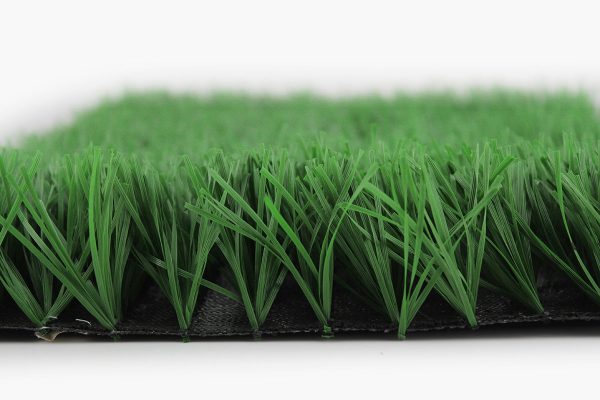
Então a indústria interna inverteu o design. Em vez de um tapete alto sustentado por preenchimento, fabricantes tufo um mais curto, carpete dramaticamente mais denso, cujas fibras se sustentam apenas pela densidade do ponto. A altura da pilha cai em 25–35 milímetros para esportes indoor — mais curto que os 40–60 mm de um campo de futebol ao ar livre, mas tecido com muito mais firmeza, então a contagem de lâminas por metro quadrado é realmente maior. A superfície joga firme e verdadeira, a bola rola de forma limpa, e não há nada solto para limpar.
Seu pedido interno é apenas carpete — sem areia, sem borracha, nenhum item de segunda linha.
Uma quadra de futsal de 880 m² (depois do desperdício) são nove rolos de carpete denso sem preenchimento e nada mais. Sem lastro para tonelada, sem espalhar equipe para agendar, sem recarga anual ao orçamento. É por isso que o pedido de compra indoor é o mais curto do mercado de grama esportiva.
A consequência prática para qualquer pessoa que dimensione um pedido é que você calcula um número — carpete m² — e você terminou. Não há coluna de tonelagem completa para estimar, nenhum material separado para frete, e nenhuma linha de trabalho para espalhar e escovar a superfície plana. A trama densa é o desenho estrutural; o tapete é todo o pedido.
Forças Laterais do Futsal: Por que o Dtex determina a vida útil do gramado
Se não preencher é o que torna simples um pedido interno, Dtex é o que determina se esse pedido sobreviverá à garantia. Dtex — gramas por 10,000 metros de fio — é a especificação de durabilidade mais importante em um tapete esportivo interno, e existe pela forma como o futsal é jogado.
Futsal acontece em quadra compacta (medidas de campo padrão da FIFA 25–42 m × 15–25 eu) com extrema densidade de jogadores. Onde um jogador de futebol ao ar livre cobre longos trechos de corrida em linha reta, um jogador de futsal realiza cortes laterais rápidos, paradas bruscas de frenagem, pivôs, e aceleração rotacional constante — muitas vezes na mesma sequência de cinco segundos. Cada um desses movimentos impulsiona a força de cisalhamento lateralmente através das fibras da grama, e que a abrasão lateral atua, literalmente, como uma lixa no fio. Multiplique isso por uma programação de reservas de seis noites por semana e o carpete estará sendo testado contra estresse milhares de vezes por noite.
A grama com baixo Dtex não pode sobreviver a isso. Afinar, o fio leve se divide onde sai do suporte, perde sua memória vertical, e “tapetes” — o achatamento permanente onde as fibras se depositam e nunca se recuperam. Uma superfície fosca não é apenas feia; é perigoso, porque ele para de absorver a carga do pé e fica escorregadio sob mudanças repentinas de direção. Este é o pior pesadelo do gerente da instalação: uma superfície que fica firme em doze meses porque alguém encomendou grama para paisagismo para economizar alguns dólares por metro quadrado.
Pense na Dtex da mesma forma que você pensa na banda de rodagem de um veículo de alto desempenho: uma especificação mais alta custa mais por unidade, mas absorve a punição que destruiria um produto mais barato em meses. Em uma quadra coberta fazendo reservas todas as noites, o carpete com Dtex mais alto quase sempre retorna um custo por hora de jogo mais baixo ao longo de sua vida.
Obstáculos Estruturais: Colunas, Portas e direção de rolagem
Um campo ao ar livre é colocado em um retângulo aberto de terreno. Um salão interno é colocado dentro de um edifício, e os edifícios têm colunas estruturais, paredes estruturais, portas, e saídas de incêndio que o layout do gramado deve contornar. Este é o maior motivo pelo qual o planejamento de rolos internos não pode ser copiado de um projeto externo: a geometria da sala dita a geometria do tapete.
Colunas são o problema clássico. Uma coluna de aço ou concreto dentro da área de jogo cria uma zona morta que os instaladores devem contornar com precisão, que consome carpete extra e força as costuras a saírem da grade limpa. Mapeie cada posição de coluna no roll plan antes de fazer o pedido — uma coluna que empurra uma costura meio metro para o lado pode adicionar silenciosamente um rolo ao requisito.
Portas e saídas de incêndio não são negociáveis. Turf não pode bloquear um caminho de saída, ponto final, portanto, o layout deve deixar esses limites claros ou terminá-los com um detalhe de borda removível. E a direção do rolo é importante para a qualidade do jogo: as fibras da grama têm uma configuração natural, e os rolos devem ser orientados para que as fibras caiam no direção de jogo principal do esporte. Faça um rolo para trás e a bola se comportará de maneira diferente contra a textura — sutil para um observador casual, olhando para um jogador sério.
Formatos internos comuns e seus requisitos de m²
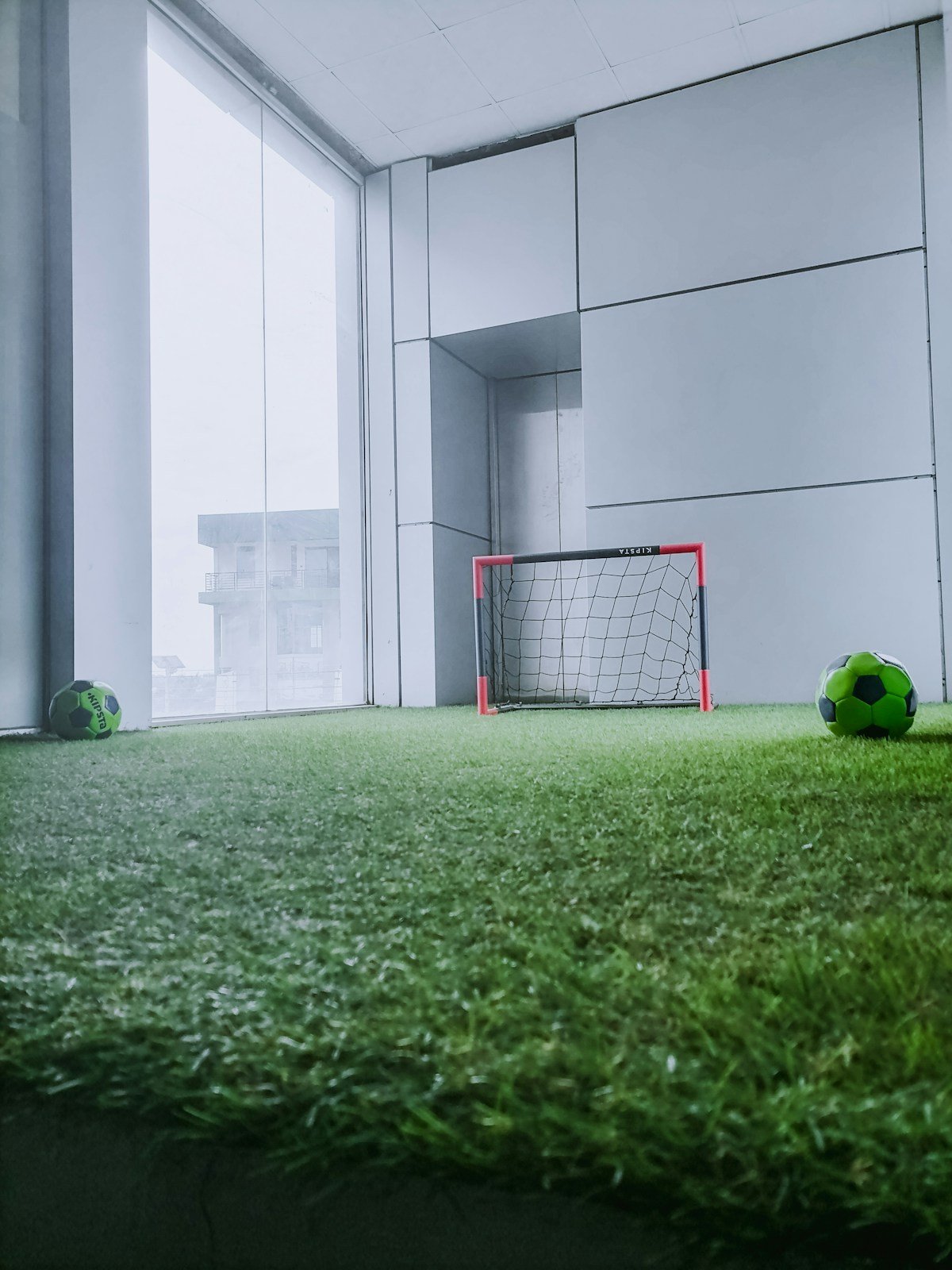
Os formatos internos variam de uma academia multifuncional compacta até um campo de treinamento completo, e a quantidade de carpete aumenta diretamente com cada área ocupada. A tabela abaixo fornece a área de jogo e a contagem prática de lançamentos (no 4 m × 25 m = 100 m² por rolo, com um 10% subsídio de desperdício para corte de obstáculos e juntas de costura) para os quatro formatos que cobrem praticamente todas as instalações internas construídas no mundo.
| Formatar | Dimensões | Área de jogo | Encomendar m² (+10%) | Rolos |
|---|---|---|---|---|
| futsal (Padrão FIFA) | 38–42 m × 20–25 eu | 760–1,050 m² | ~840–1,155 m² | 8–11 |
| 5-futebol lateral | 25–42 m × 15–25 eu | 375–1,050 m² | ~415–1,155 m² | 4–11 |
| Campo de treinamento interno (completo) | ~61 m × 28 eu | ~1.708 m² | ~1.879 m² | 19 |
| Ginásio multifuncional (pequeno) | ~20 m × 11–20 eu | 220–400 m² | ~245–440 m² | 3–5 |
A faixa dentro de cada formato reflete a tolerância do órgão regulador: FIFA permite quadras de futsal em qualquer lugar dentro dos 38–42 m × 20–25 envelope m, então uma instalação construída com pedidos mínimos 760 m² de superfície de jogo enquanto um edifício atinge o máximo de pedidos 1,050 m² — um balanço de quase três rolos. Confirme as dimensões exatas da quadra em seus desenhos arquitetônicos antes de cotar, porque a diferença entre o mínimo e o máximo do futsal é a diferença entre oito lançamentos e onze.
Layout de rolo: Instalação de rolos de 4m em salões internos
O rolo de carpete interno padrão é 4 m × 25 eu (100 m²), com um 2 m × 25 eu (50 m²) alternativa para salas apertadas onde um rolo de quatro metros não consegue passar por uma porta ou virar uma esquina. O trabalho de layout é colocar esses rolos lado a lado na área de jogo, mantendo as costuras fora das zonas de alto desgaste e a direção da fibra consistente.
Pavilhões internos geram um fator de desperdício maior do que campos externos — orçamento 8–12% em vez do 5% um campo aberto permite. O corte extra vem do corte em torno das colunas, aparando nas placas de limite, e roteamento de costuras longe de obstáculos estruturais. Em uma quadra de futsal colocada ao 20 m largura, cinco 4 m tira o ladrilho de forma limpa (20 ÷ 4 = 5); em um 28 campo de futebol de salão com largura m, sete tiras lado a lado (28 ÷ 4 = 7). Onde a largura do corredor não for um múltiplo limpo de quatro, a tira final é um rolo parcial e o corte é montado.
A direção do rolo também bloqueia a quantidade do pedido de maneira sutil. Porque todos os lançamentos em uma quadra devem ser feitos da mesma maneira para um lançamento de bola consistente, você não pode girar um recorte noventa graus para preencher uma lacuna — isso inverteria a direção da fibra e arruinaria o jogo. Planeje toda a quadra como um campo unidirecional, e deixe o recorte de uma tira alimentar a tira parcial na borda mais distante, em vez de esperar reaproveitá-lo em outro lugar.
Peso & Envio: O pedido de grama mais leve que você fará
Porque não há lastro de preenchimento, a grama sem preenchimento pesa aproximadamente 2 kg/m² — contra o 4.5+ kg/m² de um sistema externo preenchido depois de adicionar a borracha e a areia. Essa vantagem de peso é a razão pela qual um projeto interno é, frete para frete, o pedido de grama mais barato do mercado para mover.
| Projeto | Encomendar m² | Peso (~2kg/m²) | Envio |
|---|---|---|---|
| Quadra de futsal completa | ~1.050 m² | ~2,1 toneladas | LCL ou carga parcial |
| 3 quadras de futsal | ~3.150 m² | ~6,3 toneladas | 1 × 20 pés (por muito pouco) |
| Campo de treinamento coberto completo | ~1.879 m² | ~3,8 toneladas | 1 × 20 pés |
Três quadras de futsal aproximadamente 6.3 toneladas ficam dentro da carga útil de um único 20 contêiner de pés — os rolos são compactados de forma eficiente em seu volume cúbico e o peso permanece bem abaixo do teto. Compare isso com um campo ao ar livre, onde o preenchimento sozinho pode consumir um contêiner antes mesmo de o carpete ser carregado. Para um operador interno, a linha de frete no pedido de compra é consistentemente a menor de qualquer segmento de grama.
Níveis de preços
Preço FOB de fábrica para áreas internas de grama sem preenchimento aproximadamente $8 para $30 por m², definido por Dtex, altura da pilha, densidade do ponto, e certificação. Porque o tapete não contém preenchimento, o preço reflete o produto em si e nada mais — sem linha de lastro, sem custo de espalhamento. Três níveis cobrem a faixa realista, cotado FOB apenas para material.
| Nível | Caso de uso | FOB $/m² | Gama Dtex |
|---|---|---|---|
| Recreação / escola | Aulas de educação física, jogo casual | $8 – $15 | ~6.000–8,000 |
| Clube / semi-profissional | Futsal da Liga, 5-aparte | $12 – $20 | ~8.000–10,000 |
| Profissional / Certificado pela FIFA | Futsal profissional, televisionado | $18 – $30 | ~10.000–12,000+ |
A coluna Dtex é onde realmente reside a diferença de preço. Um tapete para recreação em 6,000 Dtex é perfeitamente útil para uma escola que administra educação física diurna, mas vai dar certo nos jogos noturnos da liga. Um tapete profissional em 12,000+ Dtex absorve a mesma punição por anos. Combine o nível com a intensidade de reserva de suas instalações, não para o orçamento que você gostaria de ter — porque o custo de substituição de uma superfície fosca após uma única estação supera a economia por m² de pedidos finos.
Exemplo de pedido de compra: Um complexo interno de 5 lados (3 Arremessos)
Esta é a lista de materiais que um operador de instalação coloca em um pedido de compra para um complexo de três quadras para 5 pessoas. — a área interna comercialmente viável padrão. Cada tribunal mede 40 m × 20 eu; a linha gramado para marcações de quadra é incrustada de fábrica no mesmo lote de produção e enviada dentro do pedido total. Cada figura deriva diretamente da pegada de três quadras mais um 10% subsídio de desperdício para corte de obstáculos e juntas de costura.
| Item | Especificações | Quantidade |
|---|---|---|
| Tapete verde | 4 m × 25 m rolos, 100 m² cada · 10,000 Dtex · 3/8" medidor | ~2.430 m² |
| Relva de linha (marcações de quadra) | Branco, embutido de fábrica, mesmo lote | ~90 m² |
| Patches de substituição da boca do gol | 2 por tribunal, pré-cortado | ~120 m² |
| Quantidade total do pedido | incluindo. 10% desperdício | ~2.640 m² (27 rolos) |
| Peso bruto | ~2kg/m² | ~5,3 toneladas |
| Envio | 20 contêiner de pés | 1 × 20 pés |
| Valor FOB (nível do clube) | $12 – $20 / m² | ~$31.680 – $52,800 |
Observe a linha de patches na boca do gol — um detalhe que muitos compradores de primeira viagem omitem. As bocas dos gols são a zona de maior desgaste em qualquer quadra, e solicitar patches de reposição no mesmo lote de produção garante uma correspondência de cores quando o original se desgastar. Sem eles, o patch de substituição encomendado dois anos depois chega em um tom de verde visivelmente diferente.
Cinco erros que destroem uma ordem de gramado interno
Erro 1 — Encomendar relva de enchimento para uma instalação interior. Um tapete 3G de pêlo mais longo construído para borracha e areia ficará achatado em ambientes fechados sem lastro, e qualquer preenchimento que você adicionar se tornará um pesadelo de poeira e migração pelo chão do corredor. Especifique o denso 25–35 mm produto sem preenchimento projetado para se sustentar.
Erro 2 — Escolhendo grama com baixo Dtex que se adapta em meses. Um tapete de 6.000 Dtex é adequado para uma academia de escola, mas servirá para jogos noturnos da liga de futsal, ficando esperto e perigoso dentro de uma temporada. Para qualquer instalação com reservas regulares, mantenha a linha em 8.000–12,000+ Dtex com um 3/8" medidor.
Erro 3 — Ignorando as posições das colunas no layout do rolo. Um cálculo de retângulo limpo que finge que o corredor não tem colunas será curto exatamente onde a geometria é mais estranha. Mapeie cada coluna, porta, e placa de limite no plano de rolagem antes de fazer o pedido, e orçamento 8–12% resíduos para o corte de obstáculos.
Erro 4 — Bloqueando saídas de incêndio com grama. A grama não pode obstruir um caminho de saída, período. Layouts que levam carpete até uma porta corta-fogo sem um detalhe de borda removível limpo serão reprovados na inspeção do edifício e podem ter que ser cortados novamente após a instalação — uma solução cara em uma superfície já colada.
Erro 5 — Não encomendar carpete extra para zonas de alto desgaste na boca do gol. As bocas dos gols se desgastam muito antes do resto da quadra. Se você não solicitou patches de substituição correspondentes no mesmo lote de produção, o adesivo que você colocar dois anos depois terá um tom diferente de verde — uma mancha visível que nenhuma manutenção pode esconder.
Perguntas frequentes
Quanta grama artificial eu preciso para uma quadra de futsal?
Uma quadra de futsal padrão da FIFA tem 38–42 m × 20–25 eu, dando 760–1,050 m² de superfície de jogo. Com um 10% subsídio para resíduos internos, a ordem chega a aproximadamente 840–1,155 m² — oito para onze 4 m × 25 m rolos. Construindo para o típico 40 m × 20 m pegada, isso é sobre 880 m², ou 9 rolos.
A grama esportiva coberta precisa de preenchimento?
Não. Instalações internas não usam preenchimento (4G / não preenchido) grama — a dense 25–35 carpete de mm cujas fibras ficam em pé apenas através da densidade do ponto, sem migalhas de borracha ou areia de sílica. O preenchimento solto dentro de casa se espalharia, criar poeira, e contaminar o chão do corredor, então o tapete é a ordem completa.
O que Dtex deveria ser a grama esportiva coberta?
Para esportes indoor, especificar 8,000–12,000+ Dtex. Os rápidos cortes laterais e paradas repentinas do futsal criam forças de cisalhamento que dividem o fio com baixo Dtex e causam emaranhamento permanente. Dtex mais alto significa mais pesado, fibra mais durável que resiste à abrasão dos jogos noturnos da liga. Combine-o com um 3/8 medidor de polegada para uma trama densa.
Quanto custa a grama interna FOB?
O preço FOB varia de cerca de US$ 8/m² para atividades recreativas/escolares até US$ 30/m² para carpetes profissionais certificados pela FIFA, definido principalmente por Dtex e densidade. Para um complexo de três quadras de 5 de aproximadamente 2,640 m² no nível club ($12–$20/m²), espere aproximadamente $31,680 para $52,800 para materiais, excluindo frete.
Quantos contêineres uma instalação interna precisa?
Muito poucos. A grama sem preenchimento pesa apenas cerca de 2 kg/m², então três quadras completas de futsal (~3.150 m²) pesar aproximadamente 6.3 toneladas e embalar em um único 20 contêiner de pés — por muito pouco. Esse peso leve é o que torna os projetos internos o segmento de menor custo de frete do mercado de grama esportiva.
Obtenha uma lista de materiais direto da fábrica para suas instalações internas
Envie-nos as dimensões do seu salão, formato do tribunal, e contagem de arremessos. Devolvemos um pedido de compra completo — carpete m², contagem de rolos, Especificação de Dtex e medidor, divisão de grama, peso, plano de contêiner, e preços FOB — dentro de 24 horas. Fabricação de grama artificial esportiva desde 2006, exportado para 50+ países.
Conheça o formato da sua quadra e as dimensões do salão? Envie-nos o layout da sua instalação e contagem de arremessos — devolvemos uma lista completa de materiais cobrindo a quantidade de carpetes em rolos, Especificação de Dtex e medidor, divisão de grama, peso, plano de contêiner, e preços FOB dentro 24 horas. A Relyir fabrica grama artificial esportiva desde 2006, exportando para 50+ países.