
Kapalı bir spor tesisi için çim siparişi vermek, tüm suni çim pazarındaki en temiz miktar kararıdır — çünkü içeride, the halı siparişin tamamıdır. Tonlarca kauçuk kırıntısı yok, programlanacak silis kumu yok, rezervasyon yapacak mürettebat yok. FIFA standartlarında bir futsal kortu 40 m × 20 indiğim yer 880 m² israftan sonra, olarak gemiler 9 rulolar, ve ağırlığı iki tonun altında. Bu kılavuz tam m²'yi yürür, rulo düzeni, Her iç mekan formatı için Dtex özellikleri ve FOB fiyatlandırması.
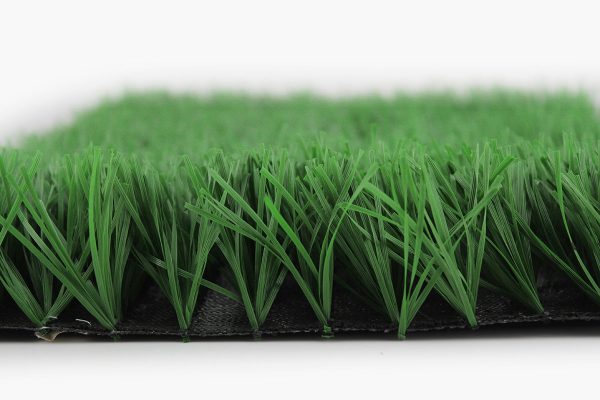
İç mekan düzeninin bu kadar basit olmasının nedeni, onu tüm dış mekan 3G sahalarından ayıran tek özelliktir.: dolgusuz çim. Açık hava futbol halıları uzun ve gevşek yapılmıştır, daha sonra 40 ile dik olarak desteklendi–60 tam boyutlu saha başına tonlarca kauçuk ve kum. Kapalı alanlarda, o ağırlık salonun zeminine dağılırdı, klima kanallarına sürüklenmek, ve her temizlik döngüsünü tehlikeli madde egzersizine dönüştürün. Yani kapalı alan çimi yoğun bir şekilde tasarlandı, kendini destekleyen halı — daha kısa kazık, daha sıkı örgü, daha ağır lif — sıfır gevşek malzeme ile kendi başına duran.
Bu tek tasarım seçimi, satın alma siparişinizin her satırına yansır. Dolgu yok, fiyatlandırılacak ikinci malzeme yok demektir, yükte balast ağırlığı yok, ve bütçeye yıllık ekleme yok. Sipariş ettiğiniz şey saf halıdır, m² cinsinden ölçülür ve gönderilir 4 milyon rulo. Tam salon boyutlarınıza göre anlık miktarlar için aşağıdaki hesap makinesini kullanın, daha sonra Dtex için okumaya devam edin, yüzeyinizin iki sezon mu yoksa on sezon mu dayanacağına karar veren ölçü ve rulo düzeni özellikleri. Tesise özel malzeme listesi için, bizim suni çim ekip içeride dönüyor 24 saat.
Satış konuşması formatınız ve tesis boyutunuz için kesin miktarları öğrenmek için aşağıdaki hesap makinesini kullanın.
🏁 Kapalı Tesis Çim Hesaplayıcı
Kapalı çim m²'yi hesaplayın, rulolar & herhangi bir tesisin maliyeti
Dolgusuz Sistemler: Halı Neden Siparişin Tamamıdır?
Bu sayfadaki her miktar rakamı tek bir mühendislik kararına bağlıdır: kapalı tesisler çalışıyor dolgusuz çim sistemleri — 4G veya dolgusuz halı olarak da adlandırılır. Dış mekan 3G sahası aslında birlikte satılan iki üründür: uzun, nispeten gevşek halı ve elyafları dikey tutmak için arasına sıkıştırılmış kauçuk kırıntısı ve silika kumundan oluşan ağır bir balast tabakası. İç mekanda bu model çöküyor. Gevşek kauçuk granüller salonun zemini boyunca sahanın dağılmasına neden oldu, soyunma odalarına kadar takip edilmek, HVAC kanallarına sürüklenme, ve birkaç hafta içinde her yüzeye yerleşen ince siyah bir toz oluşturur. Silika kumu iç mekanlarda daha kötüdür — ayak altındaki spor zemin kaplamalarına karışır ve hareket ettiğinde çıkarılması neredeyse imkansızdır..
Böylece iç mekan endüstrisi tasarımı tersine çevirdi. Dolguyla desteklenen uzun bir halı yerine, üreticiler daha kısa bir tutam, Lifleri yalnızca dikiş yoğunluğuyla kendilerini destekleyen, önemli ölçüde daha yoğun halı. Kazık yüksekliği 25–35 mm kapalı alan sporları için — 40'tan kısa–60 açık futbol sahasının mm'si, ancak çok daha sıkı dokunmuştur, bu nedenle metrekare başına bıçak sayısı aslında daha yüksektir. Yüzey sağlam ve doğru oynuyor, top temiz bir şekilde yuvarlanıyor, ve temizlenecek gevşek bir şey yok.
İç mekan siparişiniz sadece halıdır — kum yok, kauçuk yok, ikinci satır öğesi yok.
Bir futsal kortu 880 m² (israftan sonra) dokuz rulo yoğun dolgusuz halıdan başka bir şey değil. Ton için balast yok, programlanacak ekip yok, bütçeye yıllık ekleme yok. Bu nedenle kapalı alan satın alma siparişleri spor çim pazarındaki en kısa sipariştir.
Bir siparişi boyutlandıran herkes için pratik sonuç, bir sayı hesaplamanızdır. — halı m² — ve işin bitti. Tahmin edilecek dolgu tonajı sütunu yok, nakliye için ayrı malzeme yok, ve yüzeyi düz bir şekilde yaymak ve fırçalamak için iş hattı yok. Yoğun örgü yapısal tasarımdır; halı tüm sipariştir.
Futsal'ın Yanal Kuvvetleri: Dtex Neden Çim Ömrünü Belirliyor?
İç mekan siparişini basitleştiren şey dolgu olmamasıysa, Dtex bu siparişin garanti süresi boyunca geçerliliğini sürdürüp sürdürmeyeceğini belirleyen şey budur. Dtex — başına gram 10,000 metre iplik — Kapalı alan spor halısının en önemli dayanıklılık özelliğidir, ve futsalın oynanma şekli nedeniyle var oluyor.
Futsal kompakt bir sahada koşuyor (FIFA standartlarında saha ölçüleri 25–42 m × 15–25 M) aşırı oyuncu yoğunluğuyla. Bir açık hava futbolcusunun uzun mesafeli düz çizgide sprint koştuğu yer, bir futsal oyuncusu hızlı yanal hamleler yapıyor, ani frenleme durur, pivotlar, ve sabit dönme ivmesi — genellikle aynı beş saniyelik dizide. Bu hareketlerin her biri çim lifleri boyunca kesme kuvvetini yanlara doğru yönlendirir, ve bu yanal aşınma etki eder, tam anlamıyla, ipliğin zımpara kağıdı gibi. Bunu haftada altı akşam rezervasyon programıyla çarptığınızda halı her gece binlerce kez stres testine tabi tutuluyor.
Düşük Dtex'li çim bu duruma dayanamaz. İnce, hafif iplik destekten çıktığı yerde ayrılıyor, dikey hafızasını kaybeder, ve “paspaslar” — liflerin yattığı ve asla iyileşmediği kalıcı düzleşme. Matlaşmış bir yüzey sadece çirkin değildir; tehlikeli, çünkü ayak yükünü absorbe etmeyi bırakır ve ani yön değişimlerinde kayganlaşır. Bu tesis yöneticisinin en kötü kabusu: Birisi metrekare başına birkaç dolar tasarruf etmek için peyzaja uygun çim sipariş ettiği için on iki ay içinde yüzey matlaşıyor.
Dtex'i bir performans aracındaki lastik dişlerini düşündüğünüz gibi düşünün: Daha yüksek bir spesifikasyonun birim başına maliyeti daha yüksektir ancak daha ucuz bir ürünü aylar içinde parçalayacak olan cezayı absorbe eder. Her akşam rezervasyonların yapıldığı kapalı bir kortta, daha yüksek Dtex'li halı, kullanım ömrü boyunca neredeyse her zaman daha düşük oyun saati başına maliyet sağlar.
Yapısal Engeller: Sütunlar, Kapı Aralıkları ve Dönüş Yönü
Açık bir dikdörtgen arazi üzerine bir açık alan döşenir. Bir binanın içine kapalı bir salon döşenir, ve binalar var yapısal sütunlar, yük taşıyan duvarlar, kapılar, ve yangın çıkışları çim düzeninin işe yaraması gerektiğini. Bu, iç mekan rulo planlamasının bir dış mekan projesinden kopyalanamamasının en büyük nedenidir.: odanın geometrisi halının geometrisini belirler.
Sütunlar klasik sorundur. Oyun ayak izinin içinde duran çelik veya beton bir sütun, kurulumcuların etrafını hassas bir şekilde kesmesi gereken ölü bir bölge oluşturur, bu da fazladan halı tüketir ve dikişlerin temiz ızgaradan ayrılmasına neden olur. Sipariş vermeden önce her sütun konumunu rulo planına eşleyin — bir dikişi yarım metre yana doğru iten bir sütun, gereksinime sessizce bir rulo ekleyebilir.
Kapı aralıkları ve yangın çıkışları tartışılamaz. Çim çıkış yolunu engelleyemez, tam durak, bu nedenle düzen bu eşikleri açık bırakmalı veya bunları çıkarılabilir bir kenar detayıyla tamamlamalıdır. Ve oyun kalitesi için yuvarlanma yönü önemlidir: çim lifleri doğal bir yapıya sahiptir, ve rulolar, lifler aşağıya düşecek şekilde yönlendirilmelidir. birincil çalma yönü sporun. Bir ruloyu geriye doğru yatırdığınızda top, damara karşı farklı davranacaktır — Sıradan bir gözlemci için incelikli, ciddi bir oyuncuya dik dik bakmak.
Yaygın İç Mekan Formatları ve Bunların m² Gereksinimleri
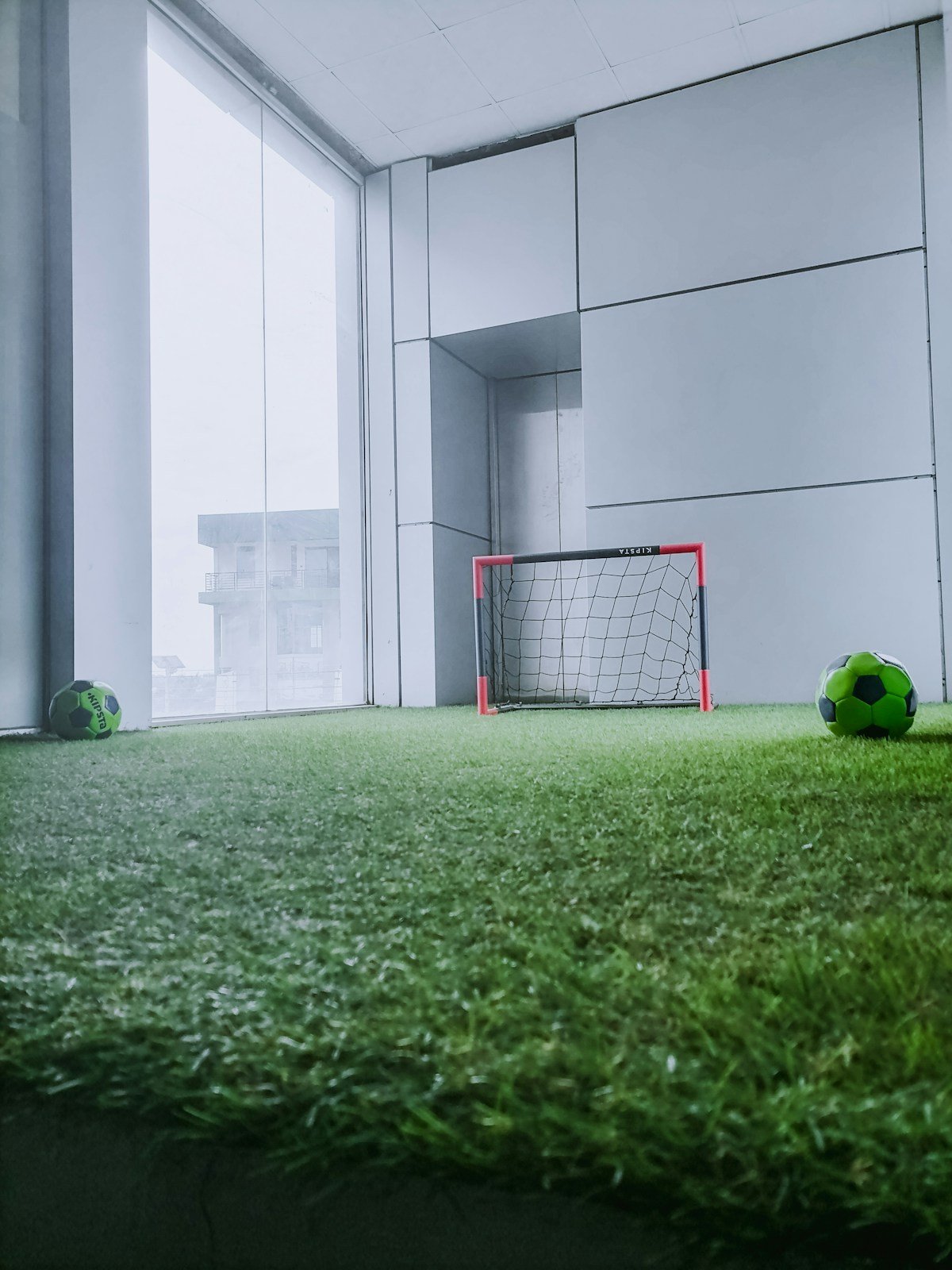
İç mekan formatları kompakt, çok amaçlı bir spor salonundan tam bir antrenman sahasına kadar çeşitlilik gösterir, ve halı miktarı doğrudan her ayak izine göre ölçeklenir. Aşağıdaki tablo oyun alanını ve pratik atış sayısını vermektedir (en 4 m × 25 m = 100 rulo başına m², bir ile 10% engel kesme ve dikiş birleşimleri için atık payı) dünya çapında inşa edilen hemen hemen her iç mekan tesisini kapsayan dört format için.
| Biçim | Boyutlar | Oyun Alanı | Sipariş m² (+10%) | Rulolar |
|---|---|---|---|---|
| Futsal (FIFA standardı) | 38–42 m × 20–25 M | 760–1,050 m² | ~840–1,155 m² | 8–11 |
| 5-A tarafı futbolu | 25–42 m × 15–25 M | 375–1,050 m² | ~415–1,155 m² | 4–11 |
| Kapalı antrenman sahası (tam dolu) | ~61 m × 28 M | ~1.708 m² | ~1.879 m² | 19 |
| Çok amaçlı spor salonu (küçük) | ~20 m × 11–20 M | 220–400 m² | ~245–440 m² | 3–5 |
Her formatın içindeki aralık, yönetim organının toleransını yansıtır: FIFA, 38 ülke sınırları içinde herhangi bir yerde futsal kortlarına izin veriyor–42 m × 20–25 m zarf, yani minimum siparişlere göre bir tesis inşası 760 Maksimum siparişlere kadar bir binada m² oyun alanı 1,050 m² — neredeyse üç ruloluk bir salınım. Teklif vermeden önce mimari çizimlerinizde sahanın tam boyutlarını doğrulayın, çünkü minimum ve maksimum futsal arasındaki fark, sekiz atış ile on bir atış arasındaki farktır.
Rulo Düzeni: Kapalı Salonlara 4m Rulo Yerleştirme
Standart iç mekan halı rulosu 4 m × 25 M (100 m²), bir ile 2 m × 25 M (50 m²) Dört metrelik bir rulonun bir kapı aralığından geçemeyeceği veya bir köşeyi dönemediği dar koridorlar için alternatif. Düzenleme işi, dikişleri yüksek aşınma bölgelerinin dışında tutarken ve elyaf yönünü tutarlı tutarken bu ruloları oyun alanı boyunca döşemektir.
Kapalı salonlar açık alanlara göre daha yüksek atık faktörü oluşturur — bütçe 8–12% yerine 5% açık bir alan izin verir. Ekstra kesim sütunların etrafından kesilmesinden gelir, sınır tahtalarına düzeltme, ve dikişlerin yapısal engellerden uzağa yönlendirilmesi. Futsal kortunda 20 m genişlik, beş 4 m fayansı temiz bir şekilde şeritler (20 ÷ 4 = 5); bir 28 m genişliğinde kapalı futbol sahası, boyunca yedi şerit döşenir (28 ÷ 4 = 7). Salon genişliğinin dördün tam katı olmadığı durumlarda, son şerit kısmi bir rulodur ve kesik kısım yukarıya doğru monte edilir.
Rulo yönü aynı zamanda sipariş miktarını da incelikli bir şekilde kilitler. Çünkü tutarlı top atışları için sahadaki tüm atışların aynı yönde olması gerekir, bir boşluğu doldurmak için kesilmiş bir parçayı doksan derece döndüremezsiniz — lifin yönünü tersine çevirir ve oyunu bozar. Tüm sahayı tek yönlü bir saha olarak planlayın, ve başka bir yerde yeniden kullanılmasını beklemek yerine, bir şeritten kesilen kısmın kısmi şeridi uzak kenardan beslemesine izin verin.
Ağırlık & Nakliye: Yapacağınız En Hafif Çim Siparişi
Çünkü dolgu balastı yok, dolgusuz çim yaklaşık olarak ağırlığa sahiptir 2 kg/m² — karşı 4.5+ Kauçuğu ve kumu ekledikten sonra doldurulmuş dış mekan sisteminin kg/m²'si. Bu ağırlık avantajı, bir iç mekan projesinin neden, navlun için navlun, taşınmak için piyasadaki en ucuz çim siparişi.
| Proje | Sipariş m² | Ağırlık (~2 kg/m²) | Nakliye |
|---|---|---|---|
| Tam futsal sahası | ~1.050 m² | ~2,1 ton | LCL veya kısmi yük |
| 3 futsal sahaları | ~3.150 m² | ~6,3 ton | 1 × 20 ft (neredeyse) |
| Tam kapalı antrenman sahası | ~1.879 m² | ~3,8 ton | 1 × 20 ft |
Yaklaşık üç futsal kortu 6.3 tonlar tek bir yükün hemen içinde duruyor 20 ft konteyner — Rulolar kübik hacmine verimli bir şekilde sığar ve ağırlık tavanın oldukça altında kalır. Bunu açık alanla karşılaştırın, halı yüklenmeden önce dolgunun tek başına bir kabı tüketebileceği yer. Bir iç mekan operatörü için, Satın alma siparişindeki nakliye hattı her türlü çim segmenti arasında sürekli olarak en küçüğüdür.
Fiyat Katmanları
Kapalı alan dolgusuz çim alanları için FOB fabrika fiyatlandırması kabaca $8 ile $30 m² başına, Dtex tarafından belirlendi, kazık yüksekliği, dikiş yoğunluğu, ve sertifikasyon. Çünkü halı dolgu taşımıyor, fiyat ürünün kendisini yansıtır, başka hiçbir şeyi yansıtmaz — balast hattı yok, yayılma maliyeti yok. Üç katman gerçekçi aralığı kapsıyor, yalnızca malzeme için FOB fiyat teklifi verildi.
| Aşama | Kullanım Örneği | FOB $/m² | Dtex Aralığı |
|---|---|---|---|
| Rekreasyon / okul | Beden Eğitimi sınıfları, gündelik oyun | $8 – $15 | ~6.000–8,000 |
| Kulüp / yarı profesyonel | Lig futsalı, 5-bir taraf | $12 – $20 | ~8.000–10,000 |
| Profesyonel / FIFA sertifikalı | Profesyonel futsal, televizyonda yayınlandı | $18 – $30 | ~10.000–12,000+ |
Dtex sütunu fiyat farkının gerçekte yaşandığı yerdir. Eğlence amaçlı bir halı 6,000 Dtex, gündüz PE'si çalıştıran bir okul için mükemmel şekilde kullanılabilir, ama gece lig maçları altında matlaşacak. Profesyonel bir halı 12,000+ Dtex yıllardır aynı cezayı çekiyor. Katmanı tesisinizin rezervasyon yoğunluğuna göre eşleştirin, sahip olmayı dilediğin bütçeye değil — çünkü keçeleşmiş bir yüzeyi bir sezon sonra değiştirmenin maliyeti, ince sipariş vermenin m² başına sağladığı tasarrufu gölgede bırakıyor.
Örnek PO: 5'er Taraflı Kapalı Kompleks (3 Sahalar)
Bu, bir tesis operatörünün üç sahalı 5'e 5'li bir kompleks için satın alma siparişine verdiği malzeme listesidir — standart ticari olarak geçerli iç mekan ayak izi. Her mahkeme tedbir 40 m × 20 M; Saha işaretlemeleri için kullanılan hat çimi fabrikada aynı üretim partisinde kaplanır ve toplam sipariş dahilinde gönderilir. Her rakam doğrudan üç sahanın ayak izinden ve artı bir 10% engel kesme ve dikiş birleşimleri için atık payı.
| Öğe | Spesifikasyon | Miktar |
|---|---|---|
| Yeşil saha halısı | 4 m × 25 milyon rulo, 100 her biri m² · 10,000 Dtex · 3/8" ölçer | ~2.430 m² |
| Hat çimi (mahkeme işaretleri) | Beyaz, fabrika kakması, aynı parti | ~90 m² |
| Kale ağzı yedek yamaları | 2 mahkeme başına, önceden kesilmiş | ~120 m² |
| Toplam sipariş miktarı | dahil. 10% atık | ~2.640 m² (27 rulolar) |
| Brüt ağırlık | ~2 kg/m² | ~5,3 ton |
| Nakliye | 20 ft konteyner | 1 × 20 ft |
| FOB değeri (kulüp katmanı) | $12 – $20 / m² | ~31.680$ – $52,800 |
Kale ağzı yamaları çizgisine dikkat edin — ilk kez alıcıların çoğunun atladığı bir ayrıntı. Kale ağızları her kortta en çok aşınan bölgedir, ve aynı üretim partisinde yedek yamaların sipariş edilmesi, orijinal aşındığında renk eşleşmesini garanti eder. Onlar olmadan, iki yıl sonra sipariş edilen yedek yama gözle görülür şekilde farklı bir yeşil tonunda geliyor.
Kapalı Alan Çim Düzenini Bozan Beş Hata
Hata 1 — Kapalı alan tesisi için dolgu çim siparişi verilmesi. Kauçuk ve kumdan yapılmış daha uzun tüylü 3G halı, balast olmadan iç mekanlarda düzleşecek, ve eklediğiniz her türlü dolgu salonun zemininde toz ve göç kabusuna dönüşüyor. Yoğun 25'i belirtin–35 mm dolgusuz ürün kendi kendini destekleyecek şekilde tasarlanmıştır.
Hata 2 — Aylar içinde matlaşan düşük Dtex'li çimlerin seçilmesi. 6.000 Dtex'lik bir halı okul spor salonu için uygundur ancak her gece futsal ligi maçları altında paspaslanır, bir sezon içinde kaygan ve tehlikeli bir hal alıyor. Düzenli rezervasyon yapan tüm tesisler için, hattı 8.000'de tut–12,000+ Dtex ile 3/8" ölçer.
Hata 3 — Rulo düzeninde sütun konumlarının göz ardı edilmesi. Salonda hiç sütun yokmuş gibi davranan temiz bir dikdörtgen hesaplaması, geometrinin en tuhaf olduğu yerde yetersiz kalacaktır. Her sütunu eşle, kapı aralığı, ve sınır levhasını sipariş vermeden önce rulo planına yerleştirin, ve bütçe 8–12% engel kesme için atık.
Hata 4 — Yangın çıkışlarının çim ile kapatılması. Çim çıkış yolunu engelleyemez, dönem. Temiz çıkarılabilir kenar detayı olmadan halıyı yangın kapısına kadar uzatan düzenler bina incelemesinde başarısız olur ve kurulumdan sonra yeniden kesilmesi gerekebilir — zaten yapıştırılmış bir yüzey üzerinde pahalı bir düzeltme.
Hata 5 — Çabuk aşınan kale ağzı bölgeleri için ekstra halı sipariş etmemek. Kale ağızları sahanın geri kalanından çok önce yıpranır. Aynı üretim partisinde eşleşen yedek yamaları sipariş etmediyseniz, iki yıl sonra taktığınız yama yeşilin farklı bir tonu olacak — hiçbir bakımın gizleyemeyeceği gözle görülür bir kusur.
Sıkça Sorulan Sorular
Futsal kortu için ne kadar suni çime ihtiyacım var??
FIFA standartlarında bir futsal kortu 38–42 m × 20–25 M, 760 veriyorum–1,050 m² oyun alanı. bir ile 10% kapalı alan atık ödeneği, sipariş yaklaşık 840'a iniyor–1,155 m² — sekizden on bire kadar 4 m × 25 milyon rulo. Tipik olana göre inşa etmek 40 m × 20 m ayak izi, bu yaklaşık 880 m², veya 9 rulolar.
Kapalı spor çiminin dolguya ihtiyacı var mı??
HAYIR. İç mekan tesislerinde dolgu yok (4G / dolgusuz) çim — yoğun bir 25–35 Yalnızca dikiş yoğunluğu sayesinde elyafları dik duran mm halı, kauçuk kırıntısı veya silis kumu içermez. İç mekandaki gevşek dolgu dağılır, toz yaratmak, ve salonun zeminini kirletmek, yani halı tam düzendir.
Kapalı spor çimi ne kadar Dtex olmalıdır??
Kapalı alan sporları için, belirtmek 8,000–12,000+ Dtex. Futsal'ın hızlı yanal kesimleri ve ani duruşları, düşük Dtex'li ipliği bölen ve kalıcı matlaşmaya neden olan kesme kuvvetleri oluşturur. Daha yüksek Dtex daha ağır demektir, Gecelik lig maçlarının aşınmasına direnen daha dayanıklı elyaf. Bir ile eşleştirin 3/8 yoğun bir örgü için inç ölçüsü.
Kapalı çimin FOB maliyeti ne kadar??
FOB fiyatlandırması, rekreasyon/okul sınıfı için yaklaşık 8 $/m²'den, profesyonel FIFA sertifikalı halı için 30 $/m²'ye kadar değişmektedir., esas olarak Dtex ve yoğunluğa göre belirlenir. Yaklaşık olarak üç kortta 5'e 5'lik bir kompleks için 2,640 kulüp katında m² ($12–$20/m²), kabaca beklemek $31,680 ile $52,800 malzeme için, navlun hariç.
Kapalı bir tesisin kaç konteynere ihtiyacı vardır??
Çok az. Dolgusuz çimin ağırlığı yalnızca yaklaşık 2 kg/m², yani üç tam futsal kortu (~3.150 m²) kabaca tartmak 6.3 tonlarca ve tek bir pakette paketleyin 20 ft konteyner — neredeyse. Bu hafiflik, iç mekan projelerini spor çim pazarının en düşük navlun maliyetli segmenti haline getiriyor.
İç Mekan Tesisiniz için Doğrudan Fabrikadan Malzeme Listesi Alın
Salon ölçülerinizi bize gönderin, mahkeme formatı, ve adım sayısı. Tam bir satın alma siparişini iade ediyoruz — halı m², rulo sayısı, Dtex ve ölçü spesifikasyonu, hat-çim ayrımı, ağırlık, konteyner planı, ve FOB fiyatlandırması — içinde 24 saat. O tarihten bu yana spor suni çimi üretiyoruz 2006, ihraç edildi 50+ ülkeler.
Kort formatınızı ve salon boyutlarınızı öğrenin? Tesis düzeninizi ve saha sayınızı bize gönderin — Rulo halindeki halı miktarını kapsayan eksiksiz bir malzeme listesi iade ediyoruz, Dtex ve ölçü spesifikasyonu, hat-çim ayrımı, ağırlık, konteyner planı, ve FOB fiyatlandırması 24 saat. Relyir o zamandan bu yana spor suni çimi üretiyor 2006, ihracat yapmak 50+ ülkeler.