
Il primo errore che la maggior parte degli acquirenti commette con un campo da baseball è trattarlo come qualsiasi altro campo sportivo. Un campo da calcio è un rettangolo d'erba. Un campo da hockey è un rettangolo d'erba. Un campo da baseball è per metà erba, metà sporco — e la metà sporca, lo “spellato”.” campo interno, rondini 2,500–3,000 M² che non ha bisogno di alcun tappeto. Ordina il tappeto erboso per l'intera superficie del campo e paghi, nave, e immagazzina migliaia di metri quadrati di erba che non srotolerai mai.
Quindi di quanta erba artificiale hai effettivamente bisogno?? Dipende quasi interamente dal livello di gioco. Un campo MLB/pro porta all'incirca 7,500 M² di vera superficie erbosa. Un campo universitario o di scuola superiore si trova nelle vicinanze 4,000 M². Un diamante della Little League ha bisogno solo di circa 1,500 M². Questo è un 5× distribuiti tra il più piccolo e il più grande — sbagli il livello e ordini cinque volte troppo, o cinque volte troppo poco. Strato sul muro curvo del campo esterno, che porta il taglio degli sprechi a 10–15%, e la quantità dell'ordine aumenta nuovamente prima che un singolo rotolo lasci la fabbrica.
Questa guida sottrae lo sporco, isola l'erba, e ti dà la m esatta², conteggio dei rotoli, fattore di spreco, piano dei contenitori, e il costo FOB per tutti e tre i livelli di campo. Utilizza la calcolatrice qui sotto per ottenere una cifra istantanea, quindi continua a leggere per la ripartizione specifica del baseball — incluso il motivo per cui la recinzione curva del campo esterno fa sì che questo sport sprechi più tappeti di qualsiasi campo rettangolare. Per layout fuori standard o complessi multicampo, Nostro erba artificiale team restituisce una distinta base personalizzata all'interno 24 ore.
Utilizza il calcolatore qui sotto per ottenere le quantità esatte per il tuo campo da baseball.
⚾ Calcolatore dell'erba del campo da baseball
Calcola il campo esterno & erba interna m², rotoli & costo
Area erba contro area spellata: Ciò di cui ha veramente bisogno il tappeto
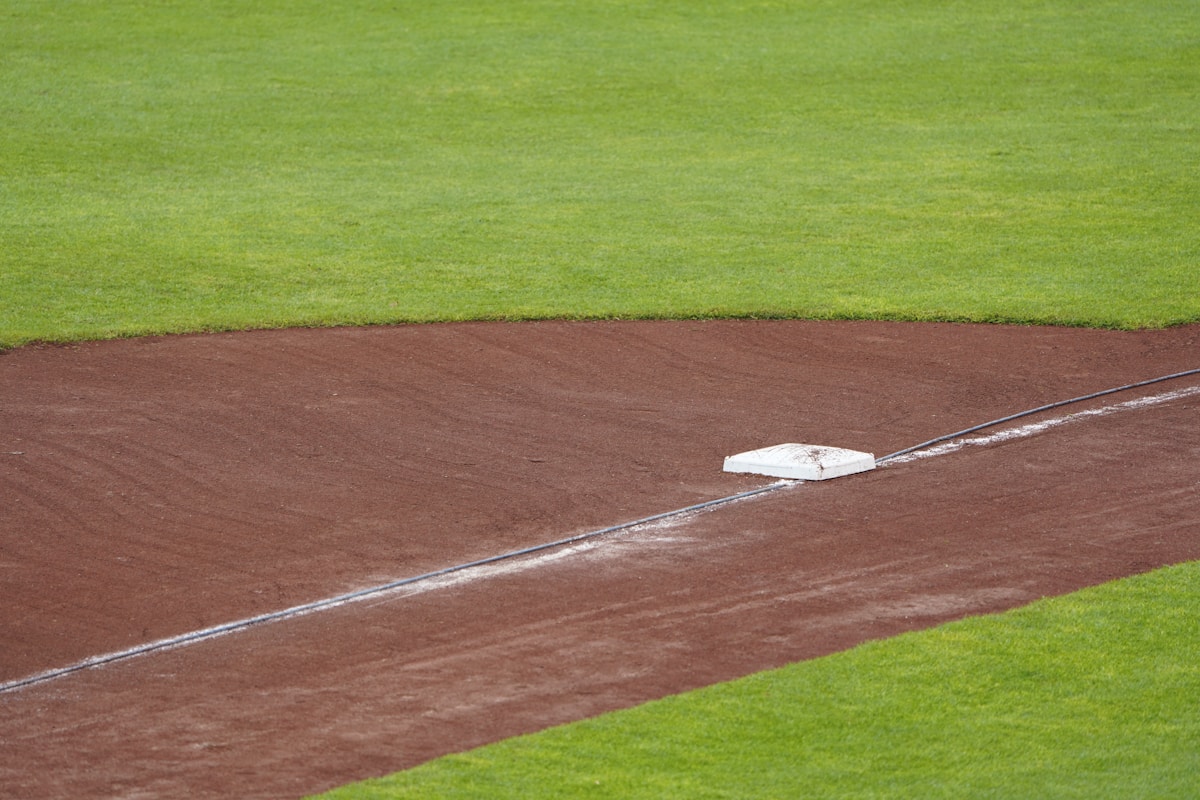
Un campo da baseball non è una superficie — si tratta di due superfici affiancate, e solo uno di loro è mai ricoperto di moquette. Dividi il campo nella tua testa e il calcolo della quantità diventa semplice.
La zona cutanea è il campo sporco: i percorsi di base che collegano la base di casa alla prima, secondo, e terzo; il monte del lanciatore e il suo altopiano circostante; e i box di battuta e le zone scorrevoli attorno a ciascuna base. In un campo professionale questa miscela di argilla e sabbia ingegnerizzata copre all'incirca 2,500–3,000 M², e riceve zero erba artificiale. Quel comportamento della superficie sporca — nel modo in cui uno slider ruba il secondo, come muore un bunt — è fondamentale per il baseball, e la moquette rovinerebbe il gioco.
La zona erbosa è tutto il resto: il campo esterno (dal bordo sterrato interno fino al recinto del fuoricampo), l'erba interna che avvolge il diamante spellato, e il territorio disgustoso su entrambe le linee. Solo queste zone accettano la moquette. Questa è la ragione principale “quanta erba per un campo da baseball” non ha una risposta unica — la domanda è davvero “quanto”. solo erba zona, dopo aver sottratto lo sporco.”
Gli acquirenti che provengono dal calcio o dall'hockey presumono che un campo sportivo sia un unico rettangolo rivestito di moquette, quindi citano il impronta totale del campo. Su un campo con specifiche MLB quell'impronta è intorno 10,500 M², ma solo ~7.500 m² è erba. Ordinare l'intera superficie significa acquistare ~3.000 m² di moquette per l'interno scuoiato — materiale che viene consegnato, pagato, e poi demolito. Togliere sempre prima lo sporco.
Il rapporto di suddivisione cambia con il livello del campo. Su un diamante della Little League sono solo i percorsi base 60 piedi (18.3 M), quindi l'area rivestita dalla pelle è più piccola in termini assoluti ma è comunque circa la metà dell'area di gioco. Su un campo da professionisti il 90 piedi (27.4 M) i percorsi di base e il campo esterno profondo spingono la quota di erba più in alto. Il risultato è che la percentuale di superficie erbosa aumenta da circa 54% alla Little League a circa 71% a livello professionale — un altro motivo per cui è il livello del campo a dettare l'ordine.
Tre livelli di campo: Il 5× Differenza di area
Il baseball è governato da una geometria specifica del livello. Distanze della recinzione, lunghezza del percorso base, e la profondità del campo esterno cambiano tutti nella Little League, università/scuola superiore, e i professionisti — e ognuna di queste dimensioni confluisce direttamente nel tuo ordine erba. Lo spread tra il livello più piccolo e quello più grande è un fattore cinque.
| Livello di campo | Impronta totale del campo | Zona erbosa (solo tappeto) | Quantità ordine (+12% sciupare) | Rotoli (4M×25M) |
|---|---|---|---|---|
| Piccola Lega | ~2.800 m² | ~1.500 mt² | ~1.680 mt² | 17 |
| College / Scuola superiore | ~6.500 m² | ~4.000 mq² | ~4.480 m² | 45 |
| MLB / Professionale | ~10.500 mq² | ~7.500 m² | ~8.400 mt² | 84 |
Da 1,500 A 7,500 M² d'erba — un 5× differenza per lo stesso sport. Sbagliare il livello non è un errore di arrotondamento; è un ordine per cinque volte troppo materiale, o un cantiere che si blocca perché la spedizione è in ritardo 6,000 M² corto. Indicare il livello del campo, la distanza del percorso base (60 piedi contro 90 piedi), e il solo erba m² su ogni ordine di acquisto.
Pareti esterne curve: Perché gli sprechi nel baseball sono più alti
È qui che il baseball ti costa tranquillamente più tappeto di qualsiasi sport rettangolare. Un campo da calcio è un rettangolo pulito — i tiri corrono direttamente verso la linea laterale, gli scarti sono minimi, e un 5% l'indennità per i rifiuti di solito lo copre. Un campo da baseball è una forma a ventaglio delimitata da a recinzione curva, e quella curva è nemica dell'uso efficiente del tiro.
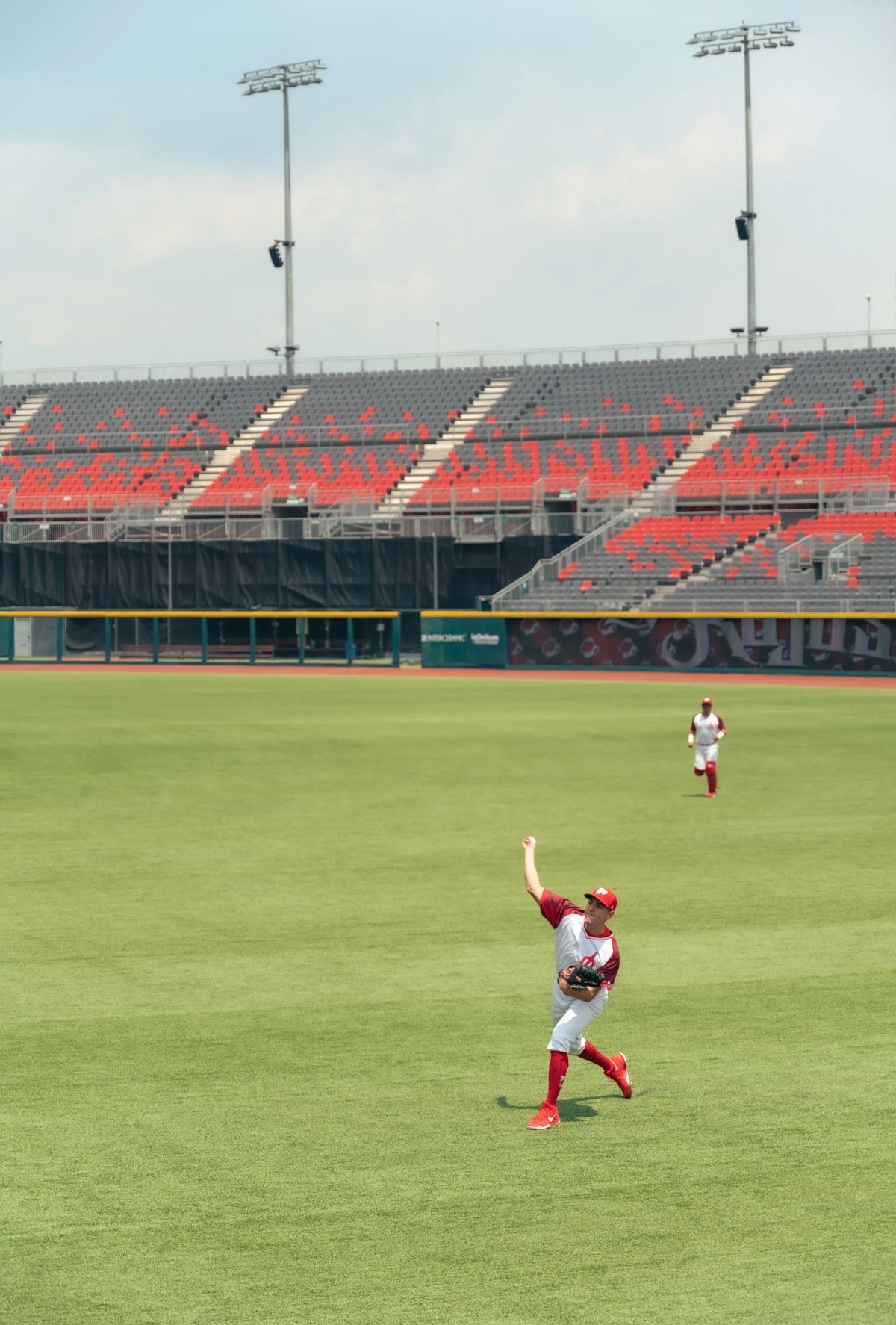
Perché i rotoli di produzione sono dritti 4 strisce larghe m, ognuno di essi che va dal bordo interno al muro esterno deve essere tagliato fino all'arco della recinzione del fuoricampo. Le strisce sulla linea di fallo corrono quasi per tutta la loro lunghezza; la striscia del campo centrale è la più corta. I triangoli ritagliati lasciati non possono essere riutilizzati — i loro angoli e le loro larghezze affusolate non si adattano a nessun altro posto sul campo. Più stretto è l'arco esterno, più pronunciati sono i ritagli.
Questo crea il fattore di spreco del baseball 10–15%, circa il doppio di 5–8% consente un campo rettangolare. E la percentuale non è uniforme tra i livelli: un campo esterno della Little League ha un raggio molto più stretto (recinzione a ~60 m) di un campo MLB (recinto a 100+ m al centro), quindi la curva morde più forte sui piccoli campi.
| Tipo di campo | Forma del campo esterno | Rifiuti consigliati | Perché |
|---|---|---|---|
| Calcio / Hockey (rettangolare) | Bordi dritti | 5–8% | I rotoli scorrono a filo della linea |
| MLB / Baseball professionista | Arco ampio, recinto profondo | 10–12% | Curva delicata, scarti moderati |
| Baseball della piccola lega | Arco stretto, recinzione corta | 13–15% | Curva stretta, ritagli pesanti |
Solo se hai un budget limitato 5% rifiuti in un campo universitario in attesa 4,000 M² d'erba, cadi brutalmente 280 M² (3 rotoli) breve e il personale di installazione resta inattivo mentre un ordine di ricarica viene spedito attraverso l'oceano. Usalo sempre 10% come pavimento per il baseball, 13–15% per la Little League e qualsiasi campo con un raggio esterno stretto.
Disposizione del rotolo: Come i rotoli da 4 m coprono un campo esterno di baseball
Erba artificiale per navi da baseball in rotoli di produzione standard 4 m di larghezza × 25 m lungo = 100 M² ogni. La strategia di layout è la stessa a tutti i livelli: i rotoli corrono longitudinalmente dal bordo sterrato interno fino al muro esterno, affiancati per tutta la larghezza del campo. Ogni striscia viene quindi tagliata lungo la linea di recinzione curva.
Prendi un campo universitario / superiore con approssimativamente 4,000 M² d'erba. Dividi per 100 M² per rotolo e ottieni una linea di base di 40 rotoli — prima dei rifiuti. Aggiungi il fattore campo esterno curvo (12% Qui) e il vero ordine sale a circa 4,480 M², O 45 rotoli. Quel “+5 tira” è un ritaglio interamente guidato dalla curva; niente di tutto ciò è un'area di campo.
| Livello di campo | Zona erbosa | Rotoli di base (÷100) | + Sciupare | Rotoli effettivi da ordinare |
|---|---|---|---|---|
| Piccola Lega | ~1.500 mt² | 15 | +2 | 17 |
| College / Hs | ~4.000 mq² | 40 | +5 | 45 |
| MLB / Pro | ~7.500 m² | 75 | +9 | 84 |
Il pretaglio in fabbrica è particolarmente utile su un campo esterno curvo. Fornire il raggio della recinzione del rilievo del sito e la fabbrica pre-ritaglia ciascuna striscia sull'arco, quindi l'installatore stende i rotoli preformati anziché tagliarli 80+ rotola su una curva sul posto — un risparmio misurato in giorni di lavoro e una linea di cucitura più pulita nel punto in cui le strisce si incontrano.
Livelli di prezzo: Come il costo unitario diminuisce su larga scala
Il per-m² il prezzo dell'erba da baseball diminuisce drasticamente man mano che l'ordine cresce. Un campo della Little League a ~1.500 m² è un acquisto modesto; un campo MLB a ~7.500 m² è una tonnellata in più di filato e una spedizione multi-container. Quel volume sblocca tre sconti contemporaneamente: impianto produttivo ammortizzato su più m², approvvigionamento di filati sfusi, e trasporto dedicato a carico completo di container invece del consolidamento LCL.
| Livello di campo / Misurare | Zona erbosa | Prezzo unitario FOB | Est . Costo del tappeto (FOB) |
|---|---|---|---|
| Piccola Lega | ~1.500 mt² | $20 – $35/M² | $30,000 – $52,500 |
| College / Scuola superiore | ~4.000 mq² | $15 – $25/M² | $60,000 – $100,000 |
| MLB / Professionale | ~7.500 m² | $12 – $20/M² | $90,000 – $150,000 |
Poiché l'ordine MLB acquista la maggior parte dei m², raggiunge il prezzo unitario più basso nello sport — anche se la spesa assoluta è più alta. La lezione per i piccoli acquirenti: se stai costruendo un complesso multicampo, raggruppare tutti i diamanti in un unico ciclo di produzione per salire al livello di prezzo successivo anziché ordinarli campo per campo al ritmo dei piccoli ordini.
Peso, Contenitori & Spedizione
L'ordine di un tappeto erboso da baseball è una delle spedizioni più pesanti nel mondo delle superfici sportive, ed è il peso — non la superficie del pavimento — che decide il tuo piano container. A circa 4.5 kg al mq² di tappeto finito, i numeri salgono velocemente.
Un singolo campo MLB in 7,500 M² pesa circa 33.75 tonnellate metriche — troppo pesante per un contenitore, poiché le linee di navigazione limitano a 40 ft high-cube a circa 26–28 tonnellate di carico utile. Si divide 2 × 40 ft quartier generale contenitori. Un campo universitario da ~18 tonnellate è adatto a uno 40 ft quartier generale. Un campo della Little League da ~6,75 tonnellate è abbastanza leggero per un singolo 20 contenitore da piedi.
| Livello di campo | Zona erbosa | Peso (~4,5 kg/mq²) | Piano dei contenitori |
|---|---|---|---|
| Piccola Lega | ~1.500 mt² | ~6,75 t | 1 × 20 contenitore da piedi |
| College / Scuola superiore | ~4.000 mq² | ~18 t | 1 × 40 ft quartier generale |
| MLB / Professionale | ~7.500 m² | ~33,75 t | 2 × 40 ft contenitori HQ |
Perché gli ordini di baseball riempiono contenitori dedicati, il costo del trasporto al m² è di gran lunga inferiore rispetto alle spedizioni LCL parziali — uno dei motivi per cui un ordine a tutto campo batte qualsiasi acquisto frammentario in termini economici unitari. Conferma sempre se il tuo preventivo è FOB (fabbrica al porto di carico) o CIF (al porto di destinazione), poiché il conteggio dei container determina la parte CIF del costo allo sbarco.
Esempio PO: Un campo da baseball del college — Distinta base completa
Per mostrare come ogni figura in questa guida si incastra, ecco la distinta completa dei materiali per un campo da baseball di un college/scuola superiore — l'ordine B2B a grandezza naturale più comune. Ogni riga sottostante è ciò che appare nell'ordine di acquisto di fabbrica.
| Elemento pubblicitario | Calcolo | Quantità | Costo unitario FOB |
|---|---|---|---|
| Tappeto in erba da baseball | 4,000 M² × 1.12 | 4,480 M² | $15 – $25/M² |
| Rotoli pretagliati in fabbrica | 4,480 ÷ 100 | 45 rotoli | incluso |
| Moquette di ricambio (zone ad alta usura) | 2% di zona erbosa | 80 M² | $15 – $25/M² |
| Nastro di cucitura + adesivo | ~20 cuciture a striscia × lunghezza del campo | ~400 mt + 90 kg | $350 – $600 |
Moquette totale: 4,560 M² (4,480 + 80 ricambio)
Rotoli totali: 46 (45 + 1 ricambio)
Peso totale: ~20,5 tonnellate
FOB stimato (solo tappeto): $67,200 – $112,000
Spedizione: 1 × 40 contenitore quartier generale da piedi
Tempi di produzione: 25–40 giorni
Questa è la suddivisione esatta che il tuo fornitore deve fornire in modo accurato. Invia un ordine di acquisto con queste voci e la fabbrica confermerà i prezzi, produzione, e pianificazione dei container in un'unica risposta — nessun giro di chiarimenti, nessuna sorpresa quantitativa alla consegna.
Cinque errori di ordinazione specifici del baseball
Dopo aver fornito superfici da baseball alle scuole, comuni, e appaltatori, gli stessi cinque errori si ripetono sugli ordini di acquisto — ognuno trasforma un ordine semplice in un problema costoso, non perché il prodotto sia sbagliato, ma perché il quantità e ipotesi sono sbagliati.
Il campo interno scuoiato è sporco, non tappeto. Se citi l'intero ~10.500 m² impronta pro invece dei ~7.500 m² zona erbosa, hai un ordine in eccesso di ~ 3.000 m² di erba senza un posto dove posarla. Sottrarre sempre prima l'area spellata.
L'arco esterno rende i ritagli inutilizzabili. Budgeting 5% su un campo universitario ti lascia ~ 3 tiri brevi e l'equipaggio inattivo mentre una nave viene ricaricata. Utilizzo 10% minimo, 13–15% per gli archi serrati della Little League.
Questi punti soggetti a forte usura all'interno dell'area spellata non sono semplice sporco — utilizzano argilla da imballaggio ingegnerizzata o una miscela di argilla ed erba che deve essere acquistata separatamente. Non fa parte dell'ordine dei tappeti erbosi, ma se manca dal BOQ del progetto il campo non è giocabile.
I segni bianchi della linea di base e della linea di fallo sono solitamente distinti, erba bianca a pelo corto intarsiata nel verde — non dipinto. Dimenticare questa voce significa che non è possibile installare i contrassegni di campo e un secondo, segue l'ordine urgente di piccole quantità a un prezzo unitario premium.
La traccia di avvertimento è la striscia di colore diverso, tappeto erboso più corto (o pietrisco) che corre appena dentro la recinzione del campo esterno per avvisare un esterno che si dirige verso il muro. Ha bisogno di un separato, specifica per pelo corto — non lo stesso tappeto del campo esterno. Omettetelo e perderete la funzione di sicurezza o sostituirete il materiale sbagliato.
Domande frequenti
Di quanta erba artificiale ho bisogno per un campo MLB?
Un campo MLB/pro porta all'incirca 7,500 M² di vera superficie erbosa — è escluso il campo interno scuoiato. Aggiungi un 10–12% indennità di campo esterno curvo e l'ordine riguarda 8,400 M², spedizione come 84 rotoli Di 4 M × 25 M. Il peso totale del tappeto è di circa 33.75 tonnellate, riempiendone due 40 contenitori high-cube da piedi.
Lo sporco del campo da baseball viene ricoperto di moquette?
NO. La zona cutanea — i percorsi di base, monte del lanciatore, e scatole di pastella — rimane come argilla/terra artificiale perché il comportamento della superficie è essenziale per giocare. Solo il campo esterno, erba interna, e il territorio disgustoso riceve un tappeto artificiale. Questo è esattamente il motivo per cui il m² è sempre ben al di sotto dell’impronta totale del campo.
Perché il fattore di spreco è più alto nel baseball che nel calcio??
Perché il campo esterno è delimitato da una recinzione curva per i fuoricampo, non una linea retta. Taglio dritto 4 m rotola su quell'arco crea ritagli affusolati che non si adattano da nessun'altra parte, spingere i rifiuti verso 10–15% — circa il doppio di 5–8% un campo da calcio rettangolare lo consente. Gli archi più stretti della Little League sprecano di più.
Di quanti contenitori ha bisogno un campo da baseball del college??
Un campo universitario/liceo ordina circa 4,480 M² (45 rotoli) pesatura ~18 tonnellate, che si inserisce in un unico 40 ft high-cube contenitore. Un campo MLB da ~33,75 tonnellate trabocca un container e ne ha bisogno di due 40 ft unità HQ.
Qual è il costo FOB dell'erba artificiale per un campo da baseball?
L'intervallo FOB tra gli ordini di baseball è $12–$35 al metro², abbassando il volume. Un campo della Little League (1,500 M²) costa $ 30.000–$52,500; un campo universitario (4,000 M²) costa $ 60.000–$100,000; e un campo MLB (7,500 M²) costa $ 90.000–$150,000. I campi più grandi raggiungono il prezzo unitario più basso attraverso la produzione, filato, e l'efficienza dei contenitori.
Richiedi un preventivo diretto alla fabbrica per il tuo campo da baseball
Inviaci il tuo livello di campo, dimensioni del prato, e livello target. Restituiamo una distinta base completa — tappeto m², conteggio dei rotoli pretagliati, peso, piano dei contenitori, e prezzi FOB — entro 24 ore. Produzione in Cina da allora 2006, esportato in 50+ Paesi.
Conosci il livello del tuo campo e le dimensioni dell'area erbosa? Inviaci le specifiche del tuo progetto O richiedi un preventivo diretto — forniremo una ripartizione del materiale su misura che copre la quantità di tappeti in m², conteggio dei rotoli pretagliati, peso, piano dei contenitori, e prezzi FOB all'interno 24 ore. Da allora Relyir produce erba artificiale sportiva 2006, esportando verso 50+ Paesi.