
Le padel est le sport de raquette qui connaît la croissance la plus rapide au monde, avec une estimation 25 millions de joueurs dans le monde et de nouveaux courts ouverts chaque jour en Europe, le Moyen-Orient, et les Amériques. Mais lors de la commande de gazon artificiel pour un terrain de padel, la plupart des acheteurs oublient le sable et se retrouvent avec un terrain glissant, surface dangereuse qui échoue dans les mois suivant l'installation.
Le terrain de double standard a besoin exactement 200 m² de moquette. Mais ce n'est que la moitié de la commande. Le remplissage de sable - à peu près 2 tonnes métriques par terrain - c'est ce qui rend la surface jouable. Sans ça, la balle ne rebondira pas correctement, les joueurs glisseront de manière imprévisible, et les fibres s'aplatiront et se dégraderont beaucoup plus rapidement que leur durée de vie nominale. Le sable n’est pas un accessoire pour le padel; c'est un élément structurel de la surface de jeu.
Ce guide donne les m² exacts de tapis, nombre de rouleaux, tonnage de sable, et coût FOB pour 1 à 8 courts, basé sur PIF (Fédération Internationale de Padel) dimensions standards. Que vous construisiez un seul terrain d'entraînement ou un complexe commercial de huit terrains, vous trouverez les quantités précises à mettre sur un bon de commande. Si votre projet a des dimensions non standards, notre gazon artificiel pour terrain de padel les spécialistes prépareront un devis personnalisé dans les 24 heures.
Utilisez le calculateur ci-dessous pour obtenir les quantités exactes pour la configuration de votre terrain.
🎾 Gazon du terrain de padel & Calculateur de sable
Obtenez le tapis exact m², rouleaux, tonnage de sable & Coût FOB
Dimensions standards FIP: Le 200 m² Référence
Chaque ordonnance d'un tribunal de padel commence par un seul, numéro fixe: 200 m². Le Fédération Internationale de Padel (PIF) fixe le terrain de double standard exactement à 20 m × 10 m = 200 m² de la surface de jeu. C'est la référence de chaque fabricant, installateur, et l'organisateur du tournoi travaille depuis, et c'est documenté dans la norme est tombé spécification utilisée dans le monde entier.
Ce qui rend le padel unique parmi les sports de raquette, c'est que la surface de jeu est entièrement entourée de parois vitrées.. Il n’y a pas de marge de liquidation à prendre en compte – contrairement tennis, football, ou le hockey, où des mètres de marge périphérique doivent être ajoutés au terrain de jeu. Le tapis est découpé aux dimensions intérieures exactes de l'enceinte vitrée, pas une empreinte approximative avec des marges de sécurité.
Cela signifie deux choses pour votre commande. D'abord, la surface du tapis est un chiffre précis, pas une gamme - 200 m² pour doubles, 120 m² pour célibataires. Deuxième, parce qu'il n'y a pas de ruissellement, chaque mètre carré que vous commandez correspond directement à la surface jouable. Il n'y a pas de tapis périmétrique gaspillé caché à l'intérieur du total.
Double (Standard): 20 m × 10 m = 200 m²
Simple (Entraînement): 20 m × 6 m = 120 m²
Enceinte: Entièrement vitrée – aucun tampon d'écoulement n'est nécessaire
Le tapis est coupé aux dimensions intérieures exactes
Le terrain de simple est plus étroit (6 m contre 10 m) mais partage la même chose 20 m de longueur. Il est principalement utilisé pour les installations de formation et de pratique où l'espace ou le budget est limité.. La plupart des clubs de padel commerciaux construisent exclusivement des courts doubles, puisque le double est le format dominant pour le jeu récréatif et professionnel.
Pourquoi le sable est 50% de votre commande (Et la plupart des acheteurs l’oublient)
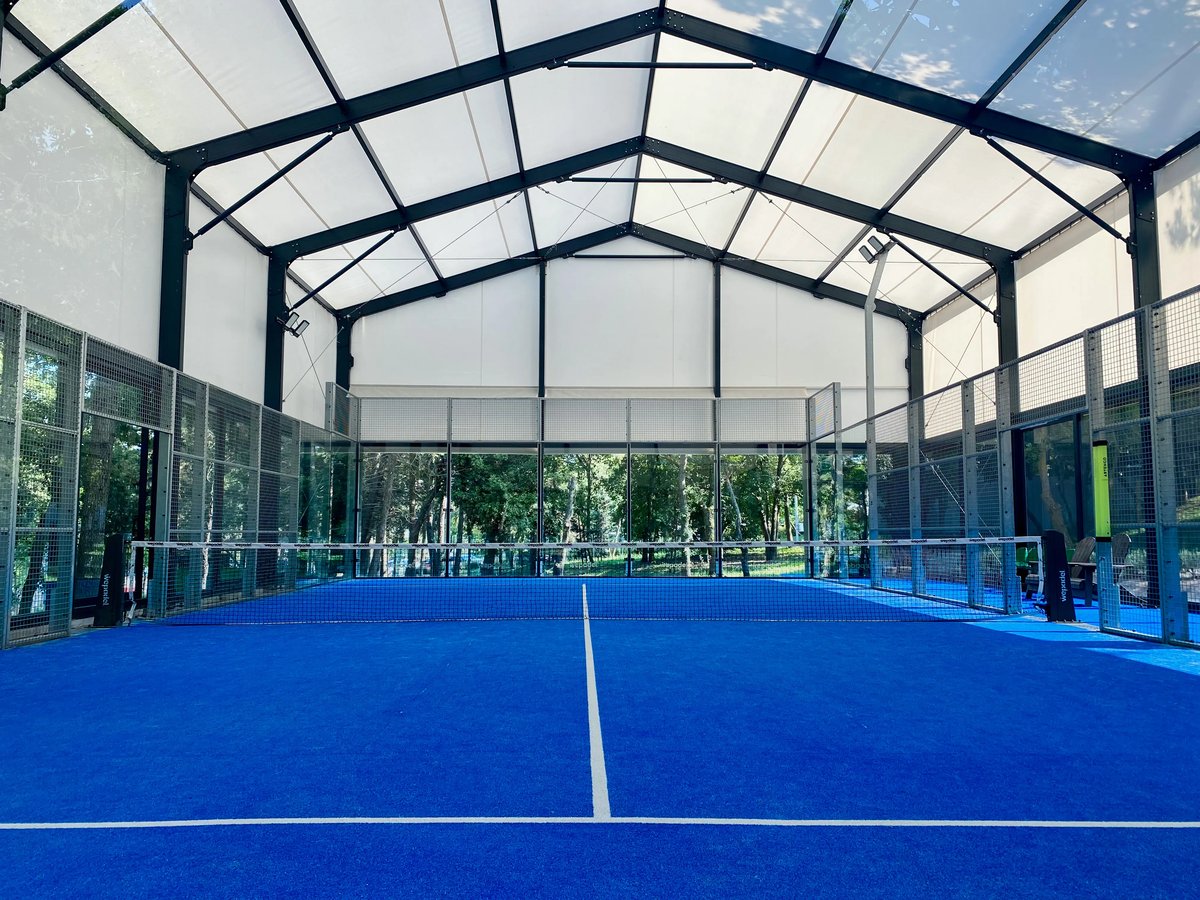
S’il y a une lacune dans la chaîne d’approvisionnement en gazon artificiel de padel, c'est ça. Les acheteurs recherchent méticuleusement les spécifications des tapis – hauteur des poils, type de fibre, dtex, jauge - puis traiter le sable comme une note de bas de page. Le résultat est un terrain doté d'une moquette parfaite et d'un remplissage nul., le rendant injouable jusqu'à ce qu'une commande de sable distincte soit obtenue, expédié, et se propager. Dans l’analyse SERP concurrentielle, la plupart des pages de fournisseurs mentionnent l'existence du sable, mais presque aucune ne quantifie la quantité nécessaire. Cette section comble cette lacune.
Padel utilise du gazon artificiel rempli de sable. Le sable n'est pas facultatif, décoratif, ou un "agréable d'avoir" — il s'agit d'un élément structurel porteur de la surface de jeu. Les fibres du tapis sont conçues pour tenir debout dans un lit de sable de silice classé, et sans ce lit de sable, le système ne fonctionne pas.
Le sable remplit quatre fonctions critiques simultanément:
- Régulation du rebond de la balle: La densité du sable contrôle la hauteur et la vitesse à laquelle la balle rebondit sur la surface. Trop peu de sable et la balle tire; trop et ça meurt.
- Prise en main du joueur: La couche de sable fournit la traction dont les joueurs ont besoin lors d'arrêts brusques, changements de direction, et mouvement latéral. Un terrain affamé de sable présente un risque de glissade.
- Stabilisation des fibres: Le poids du sable maintient les fibres du gazon artificiel à la verticale, empêchant l'aplatissement prématuré et prolongeant la durée de vie du tapis de plusieurs mois à plusieurs années.
- Résistance au feu: Les surfaces remplies de sable répondent à des normes de sécurité incendie plus élevées que les systèmes non remplis, ce qui est important à la fois pour les installations intérieures et pour la conformité aux assurances.
Le taux de remplissage de sable standard pour le padel est 10 kg/m², avec une variation acceptable de 8 kg/m² (lumière) à 12 kg/m² (lourd) en fonction de la hauteur du poil et de la conception des fibres. Pour un seul terrain double au standard FIP, le calcul est simple:
200 m² × 10 kg/m² = 2,000 kg = 2 metric tons of sand per court
Adaptez cela à un projet multi-tribunal et les chiffres augmentent rapidement. Pour un complexe de huit courts: 200 m² × 8 tribunaux × 10 kg/m² = 16,000 kg = 16 tonnes de sable. A ce volume, expédier du sable dans son propre conteneur dédié et peut représenter plus de la moitié du poids total de l'expédition.
Disposition des rouleaux: Comment des rouleaux de 4 m de large couvrent un terrain de 10 m de large
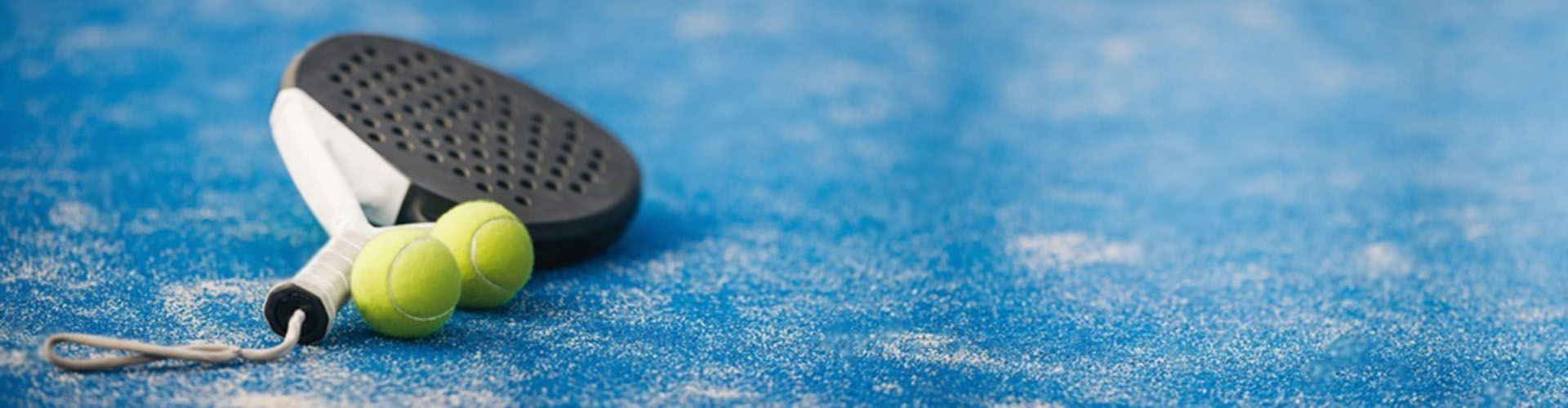
Le gazon artificiel Padel est fabriqué en rouleaux standards: 4 m de large × 25 m de longueur = 100 m² par rouleau. Il s'agit du même format de rouleau utilisé dans l'industrie du gazon sportif., et cela crée un défi géométrique spécifique au padel: le tribunal est 10 m de large, mais le rouleau est seulement 4 m de large. Comprendre comment ces rouleaux sont disposés détermine votre pourcentage de déchets et votre nombre final de rouleaux.
Pour couvrir le 10 m de largeur d'un terrain double, l'installateur a besoin de trois bandes découpées en rouleaux: un 4 m bande, un autre 4 m bande, et un 2 m bande (4 + 4 + 2 = 10). Chaque bande s'étend au complet 20 m de longueur du terrain. Cela signifie qu'un seul tribunal consomme du matériel provenant de trois rôles distincts., avec chute importante du troisième rouleau.
Pour un seul tribunal ordonné selon les rôles standards, tu aurais besoin 3 rouleaux: 300 m² de matériau commandé pour couvrir 200 m² de cour — un 33% facteur de déchets. C'est pourquoi la plupart des projets de padel professionnels utilisent prédécoupe en usine: le fabricant coupe les rouleaux aux dimensions exactes de la bande nécessaires avant l'expédition, réduire considérablement les déchets.
Avec prédécoupe en usine et standard 10% marge de gaspillage pour les coutures et les garnitures, la quantité de commande pratique tombe à 220 m² par terrain double (200 m² + 10%). Pour les projets multi-terrains, le facteur de gaspillage diminue encore plus parce que les chutes de l'aménagement d'un terrain alimentent directement le suivant.
| Tribunaux | Zone de tapis (m²) | Quantité commandée (m²) | Rouleaux nécessaires |
|---|---|---|---|
| 1 tribunal | 200 | 220 | 3 |
| 2 tribunaux | 400 | 440 | 5 |
| 4 tribunaux | 800 | 880 | 9 |
| 6 tribunaux | 1,200 | 1,320 | 14 |
| 8 tribunaux | 1,600 | 1,760 | 18 |
La recommandation pratique est claire: demandez toujours une prédécoupe en usine pour les projets de padel. L'usine peut découper avec précision des bandes aux dimensions exactes de votre terrain., réduire les déchets de 33% (rouleaux standards) à 10% (prédécoupé), ce qui permet d'économiser des coûts matériels, poids d'expédition, et le temps d'installation.
Projets multijudiciaires: La véritable économie B2B
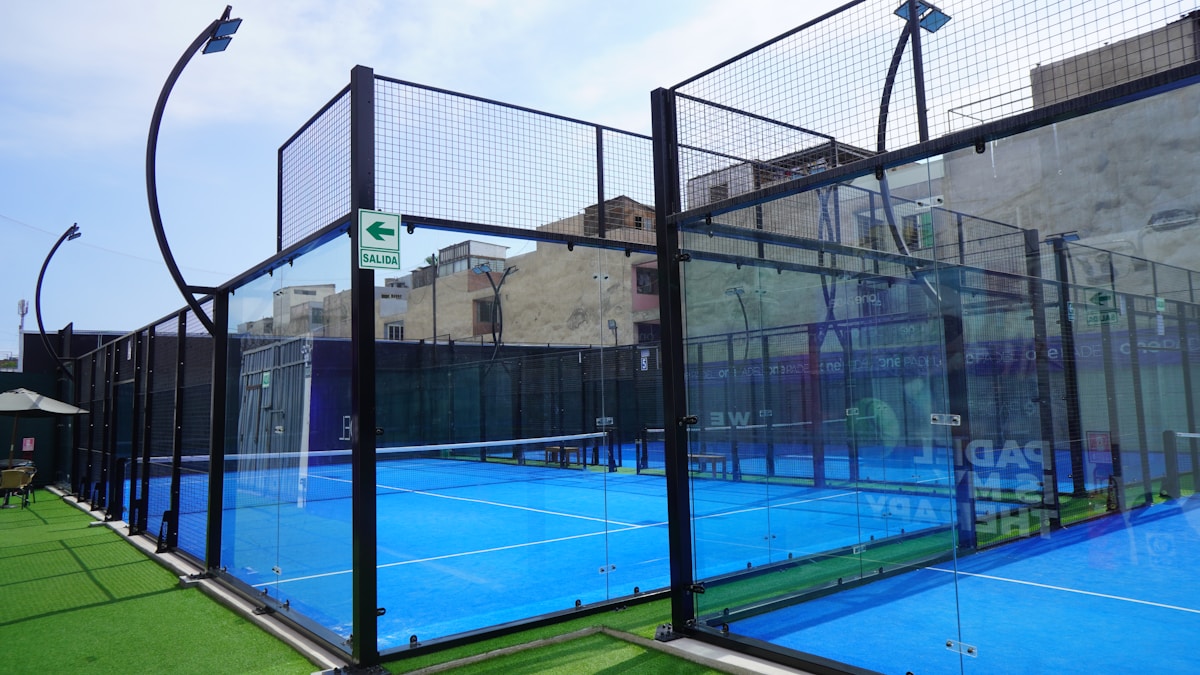
La plupart des acheteurs de padel B2B ne construisent pas un seul terrain, ils en construisent quatre à huit.. Un club de padel commercial se lance généralement avec quatre courts pour proposer un jeu en double simultané, tandis que les complexes et complexes sportifs à grande échelle passent directement à huit courts pour maximiser les revenus par mètre carré de terrain.. Les aspects économiques d’une ordonnance multijudiciaire sont fondamentalement différents de ceux d’un achat auprès d’un seul tribunal., et les comprendre est ce qui différencie un projet rentable d'un projet trop cher.
Un club de quatre terrains ordonne 880 m² de moquette (200 m² × 4 × 1.10) et 8 des tonnes de sable. Des ordonnances complexes de huit tribunaux 1,760 m² de moquette et 16 des tonnes de sable — assez pour remplir un conteneur maritime de 20 pieds en tant qu'envoi dédié. A ces volumes, le coût unitaire diminue considérablement grâce à la tarification directe en usine.
L'écart de prix entre les canaux directs d'usine et les canaux de distribution est important. Pistes de padel en gazon artificiel directement en usine $18–45$ le m² en fonction du type de fibre et de la hauteur du poil, alors que la même spécification via un distributeur occidental coûte généralement $40–70$ le m². Sur une ordonnance de huit tribunaux de 1,760 m², cette différence peut s'élever à des dizaines de milliers de dollars – suffisamment pour financer des tribunaux supplémentaires, systèmes de verre, ou éclairage.
| Taille du projet | Tapis (m²) | Rouleaux | Sable (tonnes) | Poids total | Expédition |
|---|---|---|---|---|---|
| 1 tribunal | 220 | 3 | 2 | ~2,4 tonnes | LCL |
| 2 tribunaux | 440 | 5 | 4 | ~4,8 tonnes | LCL |
| 4 tribunaux | 880 | 9 | 8 | ~10 tonnes | LCL / 20pi |
| 8 tribunaux | 1,760 | 18 | 16 | ~20 tonnes | 20conteneur de pieds |
Au-delà du simple coût matériel, les projets multi-tribunaux bénéficient d’une logistique partagée. Une seule ordonnance de huit tribunaux remplit un conteneur de 20 pieds, ce qui est bien plus rentable par mètre carré que l'expédition de quatre envois distincts sur deux terrains. L'usine regroupe également la production pour une seule commande, garantir des caractéristiques de couleur et de fibre cohérentes sur tous les terrains – un détail qui compte lorsque les terrains sont côte à côte et visibles simultanément par les joueurs.
Niveaux de prix: Comment le coût unitaire diminue à 1, 4, et 8 Tribunaux
Le prix au mètre carré du gazon artificiel de padel n’est pas stable : il baisse progressivement à mesure que le volume des commandes augmente. Un acheteur sur un seul terrain peut payer 45 $/m² pour les mêmes spécifications qu'un acheteur sur huit terrains obtient à 32 $/m².. Comprendre où se produisent ces réductions de prix vous permet de planifier un projet en plusieurs phases pour une rentabilité maximale.
Trois facteurs déterminent la remise sur volume. D'abord, configuration de production: chaque spécification nécessite un cycle de production dédié. Répartir ce coût d'installation sur 1,760 m² au lieu de 220 m² réduit considérablement les frais généraux par unité. Deuxième, approvisionnement en matières premières: fil, support en latex, et le sable sont achetés à la tonne – les commandes plus importantes sont éligibles au prix de gros. Troisième, efficacité du conteneur: une ordonnance de huit tribunaux remplit un conteneur de 20 pieds en un seul envoi, tandis qu'un seul tribunal est expédié en tant que LCL (moins que la charge du conteneur) à un coût par mètre cube beaucoup plus élevé.
| Taille de la commande | Quantité commandée (m²) | Prix unitaire FOB | Coût total du tapis | Méthode de fret |
|---|---|---|---|---|
| 1 tribunal | 220 | $28 – $45 | $6,160 – $9,900 | LCL (élevé $/m²) |
| 4 tribunaux | 880 | $22 – $38 | $19,360 – $33,440 | LCL ou 20 pieds FCL |
| 8 tribunaux | 1,760 | $18 – $32 | $31,680 – $56,320 | 20pi FCL (le plus bas $/m²) |
Les économies sont substantielles. En partant de 1 à 4 les tribunaux réduisent généralement le prix unitaire de 15 à 20 %. En partant de 4 à 8 les tribunaux économisent encore 10 à 15 %. Pour un club qui envisage de construire par phases, regrouper la commande de tapis en un seul achat – même si l’installation est échelonnée – peut financer un terrain supplémentaire entier à partir des seules économies.
Exemple de bon de commande: Un club de padel à 4 terrains — Nomenclature complète
Pour montrer comment chaque quantité de ce guide s'articule, voici la nomenclature complète pour une commande réelle d'un club de padel à 4 terrains — la taille de projet commercial la plus courante. Chaque article ci-dessous correspond à ce qui apparaît sur le bon de commande d'usine..
| Élément de campagne | Calcul | Quantité | Coût unitaire FOB |
|---|---|---|---|
| Tapis de padel (12mm) | 200 m² × 4 × 1.10 | 880 m² | $22 – 38$/m² |
| Rouleaux prédécoupés en usine | 880 ÷ 100 | 9 rouleaux | compris |
| Remplissage de sable de silice | 800 m² × 10 kg/m² | 8,000 kg (8 t) | $80 – 150$/tonne |
| Ruban de couture | ~2 coutures × 20 m × 4 | ~160 m | $0.50 – 1,00 $/mois |
| Adhésif (2-partie) | ~4 boîtes | 80 kg | $120 – $200 |
| Tapis de rechange (réparations) | 10% de 1 tribunal | 20 m² | $440 – $760 |
Tapis total: 900 m² (880 + 20 de rechange)
Sable total: 8 tonnes
Nombre total de rouleaux: 9 (prédécoupé)
Poids total: ~10 tonnes métriques
FOB estimé (tapis seulement): $19,360 – $33,440
Expédition: Conteneur LCL ou 20 pieds
Délai de production: 15–25 jours
Il s'agit de la répartition des quantités que votre fournisseur doit proposer avec précision.. Lorsque vous envoyez un bon de commande avec ces éléments de campagne précis, l'usine confirme les prix, calendrier de production, et la planification des conteneurs en une seule réponse – aucune clarification nécessaire.
Poids, Conteneurs & Expédition
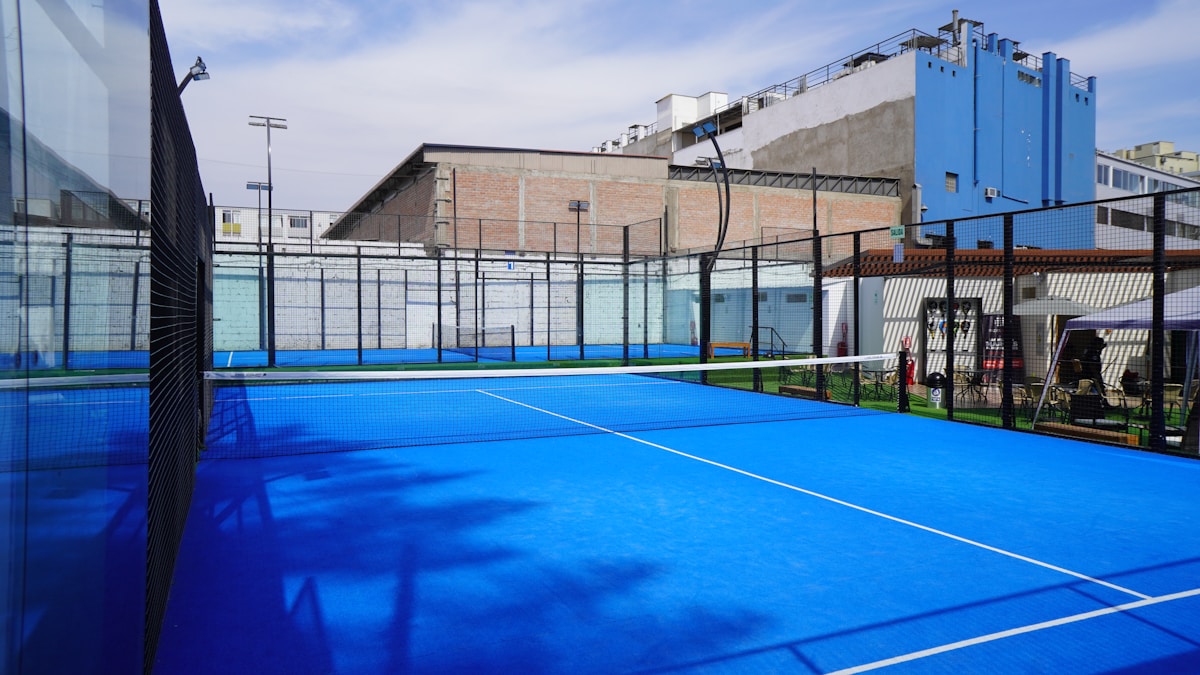
Le matériel du terrain de padel est lourd – plus lourd que ce à quoi s’attendent la plupart des nouveaux importateurs. Le tapis lui-même est dense, et le remplissage de sable ajoute la majeure partie du poids de l'expédition. La planification de la logistique en fonction du poids réel du matériau est ce qui détermine si votre commande est expédiée efficacement ou si elle entraîne des frais de transport inattendus..
Pour un terrain simple double, le tapis pèse environ 400 kg (220 m² × ~1,8 kg/m² pour 12 mm pile), et le sable en ajoute un autre 2,000 kg (2 tonnes métriques). Poids total du matériel pour un terrain: environ 2.4 tonnes. Ceci est expédié confortablement sous forme de charge inférieure à celle d'un conteneur (LCL) cargaison.
À l'échelle de quatre courts, le tapis à lui seul pèse environ 1,600 kg, avec 8 des tonnes de sable – environ 10 tonnes totales. Ceci reste dans la fourchette LCL mais se rapproche du seuil où un conteneur dédié devient plus économique par mètre cube.. Sur huit courts, le total atteint environ 20 tonnes (3.2 tonnes de tapis + 16 tonnes de sable), qui remplit une norme 20-conteneur d'expédition à pied.
| Taille du projet | Poids du tapis | Poids du sable | Poids total | Méthode d'expédition |
|---|---|---|---|---|
| 1 tribunal | ~400 kg | 2,000 kg | ~2,4 tonnes | LCL |
| 4 tribunaux | ~1 600kg | 8,000 kg | ~10 tonnes | LCL ou 20 pieds |
| 8 tribunaux | ~3 200 kg | 16,000 kg | ~20 tonnes | 20conteneur de pieds |
Des erreurs de commande qui vous coûtent du m² et de l'argent
Après avoir fourni des terrains de padel à 50+ pays, les mêmes erreurs de quantité se reproduisent sur les bons de commande. Chacun des éléments ci-dessous transforme une commande simple en un problème coûteux — pas parce que le produit est mauvais, mais parce que le quantités ont tort.
200 m² est la surface de jeu, pas la quantité commandée. Chaque tribunal a besoin d’une marge de coupe et de couture. Commandez exactement 200 m² et vous en manquerez — la dernière bande sera 10–15 m² court, interrompre l'installation pendant que vous passez une commande urgente. Ajoutez toujours 10%: commande 220 m² par terrain double.
L’erreur la plus dommageable. Le tapis arrive, le sable non, et le tribunal ne peut pas ouvrir. Au moment où une commande de sable distincte est obtenue et expédiée, les fibres peuvent s'être déjà aplaties à cause du trafic piétonnier lors de l'installation. Incluez toujours le tonnage de sable dans le même bon de commande: 2 tonnes par terrain à 10 kg/m².
Des rouleaux standard de 4 m produisent 33% déchets sur un terrain de 10 m de large (tu as besoin 4+4+2 = 3 bandes, mais utilisez seulement 2 des rouleaux complets de matériau). La prédécoupe en usine réduit les déchets à 10%. Sur une ordonnance de 4 tribunaux, c'est la différence entre commander 12 rouleaux et 9 rouleaux — un 25% économie de matériaux et réduction du fret.
Les acheteurs calculent le poids du tapis mais oublient que le remplissage en sable est de 5.× plus lourd. Une ordonnance de 4 tribunaux n'est pas 1.6 des tonnes de tapis — c'est 1.6 des tonnes de tapis plus 8 des tonnes de sable, totalisant ~10 tonnes. Cela détermine si vous avez besoin de LCL ou d'un conteneur complet. Si vous vous trompez de poids, vous serez confronté à des suppléments de fret ou à des retards douaniers..
Zones à forte usure (boîtes de service, superficie nette) peut avoir besoin d'un correctif après 3–5 années. Commander une quantité exacte sans aucune pièce de rechange signifie qu'une réparation future nécessite une expédition urgente d'un minimum de commande de tapis dépareillés.. Ajout 20 m² (10% d'un tribunal) la commande initiale coûte peu mais permet d'économiser des milliers de dollars plus tard.
Foire aux questions
Combien de temps dure le gazon artificiel de padel?
Une surface de terrain de padel bien spécifiée dure 8–12 ans avec un bon entretien. Les facteurs clés sont la stabilisation UV (pour terrain extérieur), niveaux de remplissage de sable corrects maintenus grâce à des appoints périodiques, et une installation professionnelle avec une bonne liaison des coutures. Les installations commerciales à fort trafic pourraient connaître l’extrémité supérieure de l’usure plus tôt; les courts privés à usage plus léger dépassent souvent 12 ans avant le remplacement.
Puis-je utiliser du gazon de court de tennis ordinaire pour le padel?
Non. Le padel nécessite une surface spécifique conçue pour taux de remplissage de sable plus élevés (8–12kg/m²) et un particulier texture des fibres qui régule le rebond de la balle dans la fenêtre de performance FIP. Gazon artificiel pour courts de tennis — qu'ils soient sur terrain dur, simulation d'argile, ou même rempli de sable - a une hauteur de poil différente, densité, et des spécifications de remplissage qui ne fourniront pas un comportement correct de la balle de padel. L'utilisation de gazon de tennis pour le padel produit une surface qui joue mal et échoue plus rapidement.
Les courts de padel intérieurs ont-ils besoin de sable?
Oui. Le remplissage de sable est essentiel pour comportement du ballon, que le terrain soit intérieur ou extérieur. Le sable régule le rebond, fournit une traction au joueur, et stabilise les fibres. Un terrain couvert sans sable aurait les mêmes caractéristiques injouables qu’un terrain extérieur. Les courts intérieurs peuvent utiliser une qualité ou un taux de sable légèrement différent en fonction de la hauteur des poils. (souvent 15 mm premium pour l'intérieur), mais le sable lui-même est obligatoire.
Quelle est la couleur bleue sur les terrains de padel professionnels?
La surface de jeu bleue est la couleur standard exigée par la FIP pour les tournois professionnels. La teinte spécifique – un bleu moyen-foncé – offre un contraste visuel optimal pour les joueurs qui suivent le ballon et les caméras de diffusion couvrant le match.. Même si les terrains récréatifs peuvent être verts, le bleu est désormais la valeur par défaut pour tout terrain destiné au jeu compétitif ou télévisé. La couleur est teinte dans la fibre lors de la fabrication, non appliqué par la suite.
Combien coûte un terrain de padel complet?
Un terrain de padel complet, comprenant du gazon artificiel et du sable, murs de verre, charpente, clôture grillagée, système de réseau, éclairage, et la construction de la sous-base - coûte généralement $24,000–65 000 $ total. La gamme dépend fortement de la qualité du verre, catégorie de tribunal (Tournoi FIP vs récréatif), emplacement, et si l'installation est incluse. La moquette et le sable représentent à eux seuls environ 15 à 25 % du coût total du projet.; le verre et la structure représentent la majorité.
Puis-je commander uniquement le tapis si je m'approvisionne en sable localement ??
Oui, et de nombreux acheteurs expérimentés font exactement cela. S'approvisionner en sable localement est une pratique courante qui élimine 60 à 80 % du poids de l'expédition et réduit considérablement les coûts de transport. L'usine fournira les spécifications exactes de la qualité du sable (généralement du sable de silice arrondi de 0,2 à 0,6 mm) afin que votre fournisseur local corresponde à la norme requise. Assurez-vous simplement que le sable local répond aux spécifications de gradation : l'utilisation de sable de construction générique compromettrait la jouabilité du terrain..
Connaissez le nombre et les dimensions de votre terrain? Envoyez-nous le cahier des charges de votre projet — nous vous renverrons une répartition des matériaux sur mesure couvrant la quantité de tapis, nombre de rouleaux prédécoupés en usine, tonnage de sable, plan de conteneur, et prix FOB dans 24 heures. Relyir fabrique du gazon artificiel sportif depuis 2006, exporter vers 50+ pays.