
Most buyers pick putting green turf by color and price, then wonder why the finished green rolls slow and glossy. The surface’s true quality lives in four specifications — pile height, face weight, fiber material and speed rating — and each one is printed on a datasheet you can demand before money moves. This guide walks those specs in the order decisions actually happen, so the turf you order behaves like the green you imagined.
Relyir has manufactured golf and landscape turf in China since 2006, exporting to 50+ countries, and the same four questions open every putting green quotation we write. Whether you are building one backyard green or importing a container of turf for distribution, the selection logic below turns a confusing catalog into a short, checkable spec sheet. Golfers can use it to brief an installer; buyers can use it to audit a supplier.
Start With Speed: What the Stimp Number Really Tells You
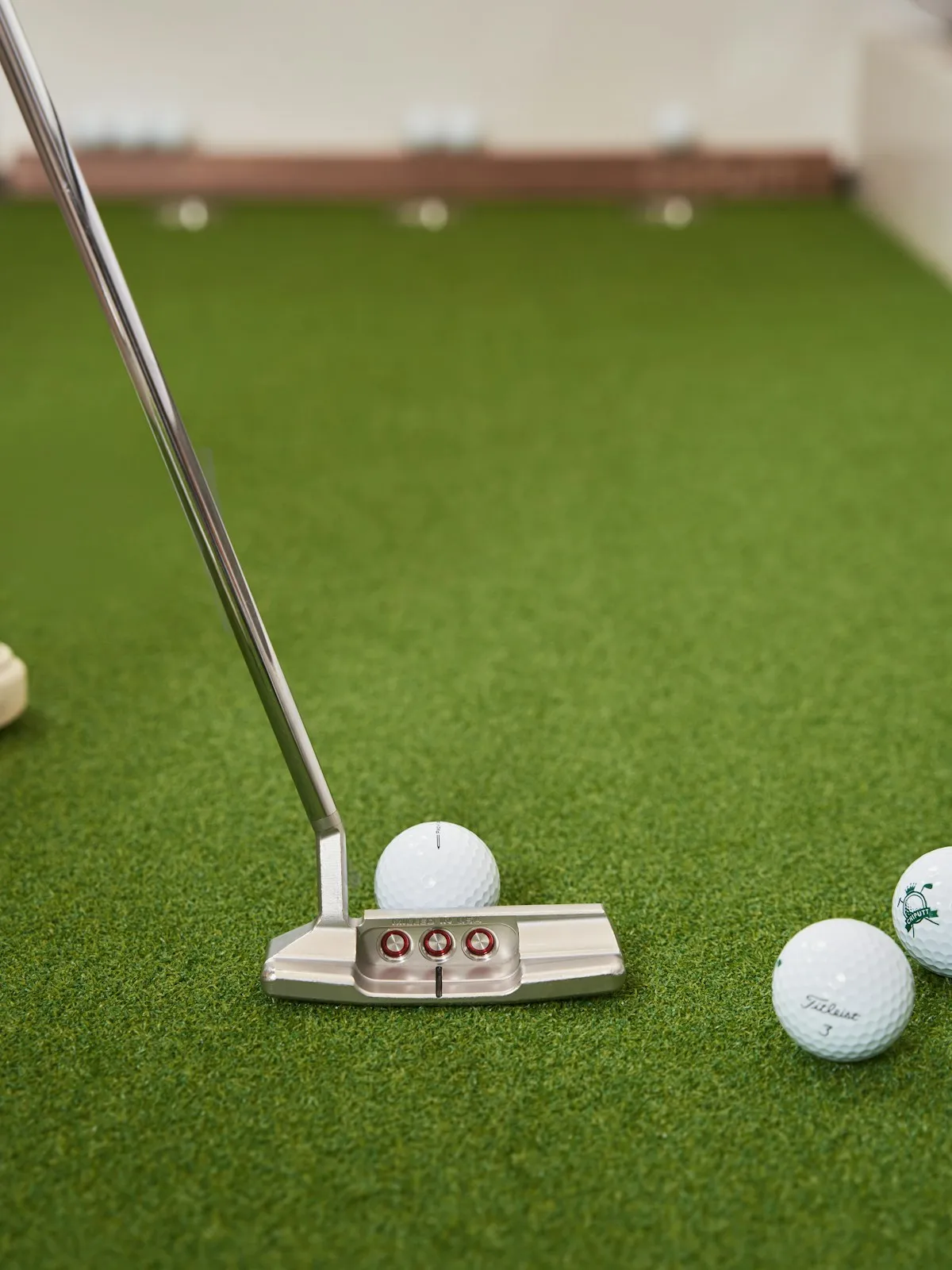
Every putting conversation should start with speed, because speed dictates the other three specs. The industry measures it with the Stimpmeter, a USGA-standard aluminum bar that releases a ball at a repeatable velocity and counts how many feet it rolls. The USGA grades regular course greens as slow at 8 feet, medium at 10 and fast at 12, while U.S. Open preparations push 10 to 14 feet — and Oakmont, the fastest regular venue, has touched 15.
| Speed class | Regular play | U.S. Open prep | Typical green |
|---|---|---|---|
| Slow | 8 ft | 10 ft | Municipal courses |
| Medium | 10 ft | 12 ft | Member clubs |
| Fast | 12 ft | 14 ft | Tournament venues |
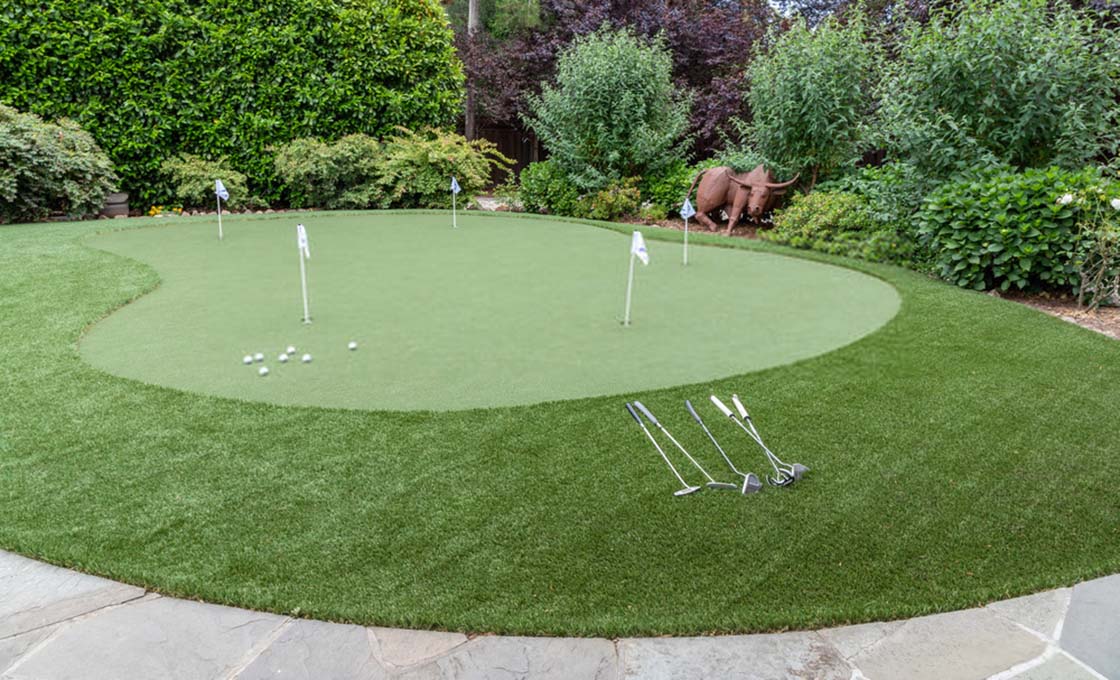
Order 10–12 stimp for a home green, 12–13 for serious training
Ten to twelve matches the member clubs most golfers actually play; anything faster demands smoother bases and better upkeep than most homes receive.
Name the target number first and the remaining choices nearly make themselves — fiber, pile and infill all exist to hit a speed. A supplier who cannot state a stimp figure for a given turf is selling carpet, not a putting surface.
Pile Height and Face Weight: The Stiffness Equation
Speed comes from geometry. Short, dense pile stands the fibers up and lets the ball roll on their tips; tall, loose pile lets the ball nestle in and drag. Face weight — the mass of yarn per square yard — is what lets a short pile stay dense, so the two specs are one decision read off two lines of the datasheet.
| Pile height | Face weight | Resulting speed | Fits |
|---|---|---|---|
| 9–12 mm | 50–70 oz/yd² | 11–13 stimp | Training greens |
| 12–15 mm | 40–60 oz/yd² | 9–11 stimp | Family backyard greens |
| 15–19 mm | 35–50 oz/yd² | 8–10 with infill | Multi-use lawns |
Ranges above are trade-typical; factories tune within them for each order. The pattern to remember is the trade-off at the edges: the fastest training surface sacrifices plushness, and the plushest multi-use surface sacrifices speed. Buying both qualities in one turf is the specification equivalent of a contradiction.
Nylon vs Polypropylene vs Polyethylene
Three fibers cover the putting market, and each buys a different behavior. The choice is less about “best” than about which failure you would rather avoid — heat, flattening or softness.
| Fiber | Roll quality | Strengths | Watch for |
|---|---|---|---|
| Nylon | Fast, most consistent | Stands upright with no infill | Darker sheen; higher cost |
| Polypropylene | True with light dressing | Tunable speed; UV-stable; value | Flattens without sand |
| Polyethylene | Softer, slower | Realistic for chips and fringe | Rarely used for the green itself |
The verdict most installers land on: nylon for indoor and training greens, polypropylene for outdoor backyard builds where sand infill is already part of the job, and polyethylene reserved for the fringe where golfers open the face. A mixed build — nylon green, poly fringe — is not a compromise; it is how course-like greens are specified.
Infill or No-Infill for a Putting Green
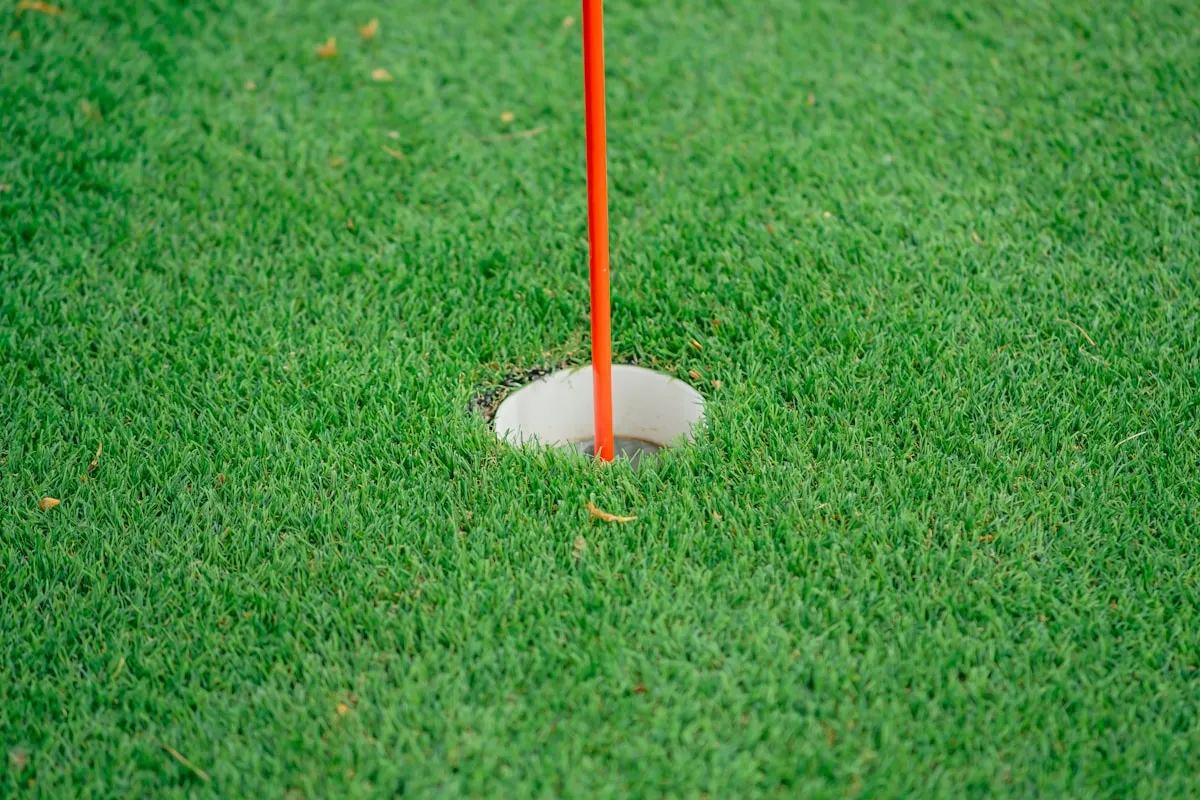
Infill is the most misunderstood line in the quotation. Sand infill does three jobs outdoors — it props fibers upright, tunes speed and weights the turf flat — but it also adds cost, mess and a maintenance schedule. No-infill builds achieve the same firmness through dense short pile, which is why they dominate indoors and prefabricated kits.
Whichever route the project takes, insist the quotation states the infill type, rate and whether speed was tested before or after dressing — a stimp number measured on bare turf will not survive its first sanding.
Backing, UV and Where the Green Lives
Two environment questions finish the specification. First, backing: a full polyurethane backing lies flat on hard surfaces and resists moisture from below, while thin latex secondary backings cost less and tend to curl at the edges within a season or two. Second, UV: any turf living outdoors needs stabilized yarn and backing regardless of pile, because uncovered polypropylene can fade and stiffen within a few seasons of full sun — the same degradation curve documented for outdoor synthetic turf generally.
Drainage completes the outdoor picture. Perforated backings move rain through the profile so the base underneath does the filtering, and they dry fast enough for morning play. An indoor green has no such needs, which is one more reason indoor turf costs less per square meter at equal quality.
From Spec to Order: Roll Width, MOQ and Customization
Turning a spec sheet into a purchase order adds three logistics decisions. Standard roll widths typically run 2 m to 4.15 m, and wider rolls mean fewer seams across a green — for most backyard shapes, a single 4-meter-wide roll covers the putting surface with only perimeter cuts. Custom widths, hole positions, stimp targets and logos are all normal factory requests; what changes between suppliers is the minimum order that unlocks them.
Three questions finish the audit before the PO goes out. Can the factory state stimp, pile and face weight on the datasheet for the exact batch? Will they film a ball-roll test on production material, in both directions? And can mixed models share one container if the order combines green, fringe and landscape turf? A factory answering yes to all three — as we do for distributors in 50+ countries — has already done most of your quality control.
The selection guide above decides the turf; our complete artificial putting green guide covers everything around it — base construction, contours and hole placement — and the backyard putting green buying guide prices a full build end to end. Reading all three takes twenty minutes and removes most of the risk from a green that should last a decade.
Five Mistakes to Avoid When Buying Putting Green Turf
The same five errors account for most disappointing greens, and every one of them is checkable before the order ships.
- Buying on looks alone — a plush, glossy sample photographs well and putts terribly; demand the stimp figure instead.
- Skipping the face-weight line — identical pile heights with different face weights roll like different products.
- Matching infill to nothing — quoting speed before dressing and shipping after dressing are different products.
- Ignoring roll direction — seams and sheen change across a green when rolls are laid against each other’s grain.
- Treating indoor and outdoor turf as one SKU — paying for UV indoors or skipping it outdoors both waste money.
Common mistake: approving a sample that was never tested at the ordered spec. Samples are cut from pilot runs; ask for the datasheet of the batch that will actually load the container.
Frequently Asked Questions
What pile height is best for a putting green?
For a dedicated green, 9–12 mm dense pile rolls fastest and cleanest. Greens that double as play lawns step up to 12–15 mm and accept a slower roll as the trade.
What stimp speed should a backyard green have?
Ten to twelve feet suits most golfers because it mirrors member-club greens. Serious practice greens run 12–13, which demands a smoother base and firmer maintenance routine.
Is nylon or polypropylene better for putting greens?
Nylon for speed and no-infill builds, polypropylene for tunable outdoor greens on a budget. Many course-like greens combine both: nylon surface, polypropylene or polyethylene fringe.
Does putting green turf need infill?
Outdoors, a trade-typical 1–2 lbs of silica sand per square foot props fibers and tunes speed. Indoors and in kits, dense short pile removes the need entirely — check whether quoted speeds were measured with or without dressing.
How long does putting green turf last?
Quality nylon and polypropylene greens routinely serve 10–15 years outdoors, longer indoors. UV-stabilized yarn, full PU backing and honest face weight are the three specs that decide which end of that range a project lands on.