
Most indoor practice stalls for the same reason: the mat rolls untrue, so every putt you groove at home has to be un-learned on real grass. The fix is picking the right indoor putting green turf, not a better stroke. Five turf types cover the whole home-practice market, and each one trades speed, feel and budget differently — this guide ranks them, with the specs distributors and importers need before stocking any of them.
Relyir manufactures putting green turf in Ningbo for importers and sports distributors in 50+ countries, and the indoor segment is the most common question we get: which surface actually survives daily home practice? The five choices below are the ones that matter, ordered from tour-style training mats to portable rolls. Home golfers can use them to shortlist a purchase; buyers can use them to build a product range that does not overlap itself.
What Makes Indoor Putting Green Turf Different
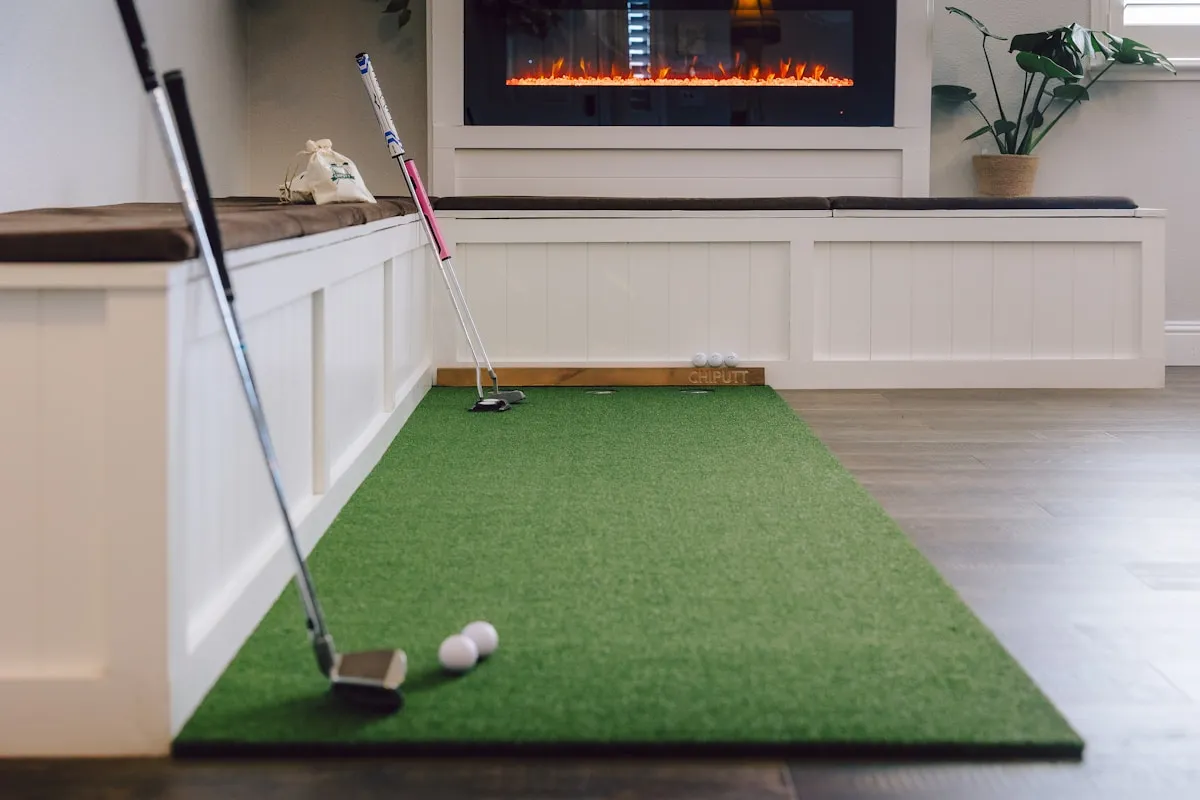
Indoor putting turf is a different product from the outdoor backyard green, and treating them as one category is the first buying mistake. Outdoor greens fight UV, drainage and foot traffic, so they run taller piles and sand infill. Indoor turf lives in a climate-stable room, which frees the design to chase one thing: a true, repeatable roll at low maintenance.
| Factor | Indoor putting turf | Outdoor backyard green |
|---|---|---|
| Typical pile height | 9–12 mm, dense | 12–19 mm with infill |
| Infill | Usually none | Silica sand, often layered |
| Speed control | Built into fiber and pile | Adjusted with infill amounts |
| UV requirement | Minimal | Mandatory stabilizers |
| Base | Floor, mat or tiles | Compacted aggregate base |
The practical consequence: indoor turf is chosen almost entirely by its fiber, pile and speed rating, which is why the five choices below are organized by construction rather than by price band.

The Five Indoor Putting Green Turf Choices
Each choice below carries a one-line verdict and the specification line that decides it. All five exist because a different golfer buys each one — there is no single “best,” only a best match.
1. Textured Nylon Training Mats
Verdict: the closest indoor surface to a tournament green. Textured nylon stands upright without any infill, which lets factories shear the pile to a fast, consistent speed. Expect a 10–13 stimp feel, a non-directional roll and the highest price per square meter in the category. The texture also matters more than most buyers realize: the raised fiber pattern mimics the nap of a bentgrass green, so the ball takes a touch of check into the stroke instead of skidding. This is the surface serious golfers mean when they say a mat “rolls like a real green.”
Spec line: pile 9–12 mm dense · stimp 10–13 · no infill · non-directional grain · premium price tier
2. Polypropylene True-Roll Surfaces
Verdict: the volume seller, and the easiest to tune. Polypropylene fibers roll cleanly but need a light sand dressing to stay upright, which makes speed adjustable after installation — more brush, slower ball. It costs less than nylon, tolerates heavy daily use and suits mid-price retail ranges. Most 3′×9′ starter mats on the market use it, which also means replacement demand and comparison shoppers already know the feel.
Spec line: pile 10–12 mm · stimp 9–11 tunable · light sand dressing · mid price tier
3. Dual-Surface Fringe Systems
Verdict: the upsell that mimics a real green edge. These combine a fast center with a higher, rougher fringe band, so chipping and bump-and-run practice work in the same footprint. The manufacturing detail that matters is the seam between the two surfaces — glued joints can ridge over time, while woven-in fringe stays flat. Ask the supplier whether fringe is tufted into the same backing or bonded on; the answer predicts the product’s second year. Retailers with photography-driven listings sell this type well.
Spec line: green 10–12 mm + fringe 25–35 mm · stimp 9–11 · tufted fringe preferred · upper-mid price tier
4. Portable Roll Mats
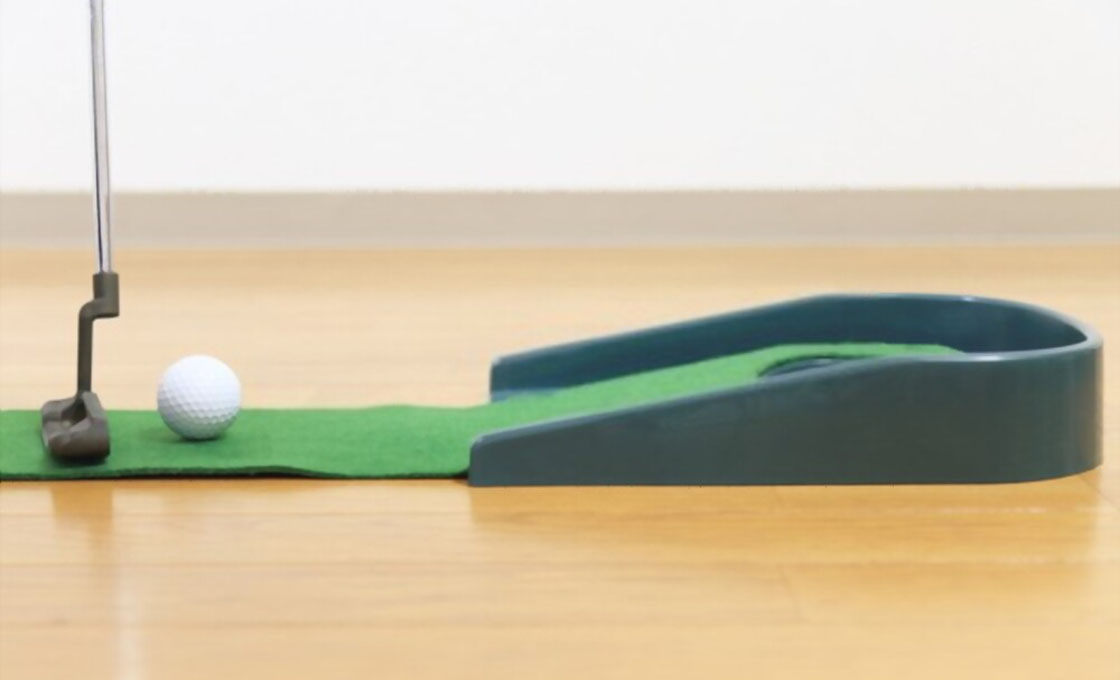
Verdict: the entry point that opens the widest funnel. A portable roll puts a consistent surface in a box: unroll on any floor, roll up under a bed. Speeds are moderate and the roll memory of the packaging is the main quality risk — better factories ship rolled large or flat-packed to avoid edge curl. For importers, this is the highest-turn SKU in the indoor segment because the freight profile is excellent: boxed mats stack cleanly, and a single pallet covers a trial order.
Spec line: stimp 8–10 · boxed or flat-packed · entry price tier · highest turn rate
5. Modular Tile Systems
Verdict: the custom-room solution. Interlocking tiles let an installer cover awkward rooms wall-to-wall, add holes wherever the space allows, and replace single damaged tiles instead of the whole surface. Costs sit between rolls and nylon mats, and logistics favor them: tiles cube out a container far better than long roll tubes, which trims freight per square meter on mixed loads. For distributors, tiles also solve the showroom problem — one tile on a rack demonstrates the system without inventory depth.
Spec line: tile 30–60 cm modules · stimp 9–11 · replaceable per tile · best container cube
Shortlist by golfer type, not by price alone
Serious golfer → textured nylon · Gift buyer → polypropylene 3′×9′ mat · Chipper → dual-surface system · Renter → portable roll · Custom room → modular tiles
Match Speed to the Practice Goal
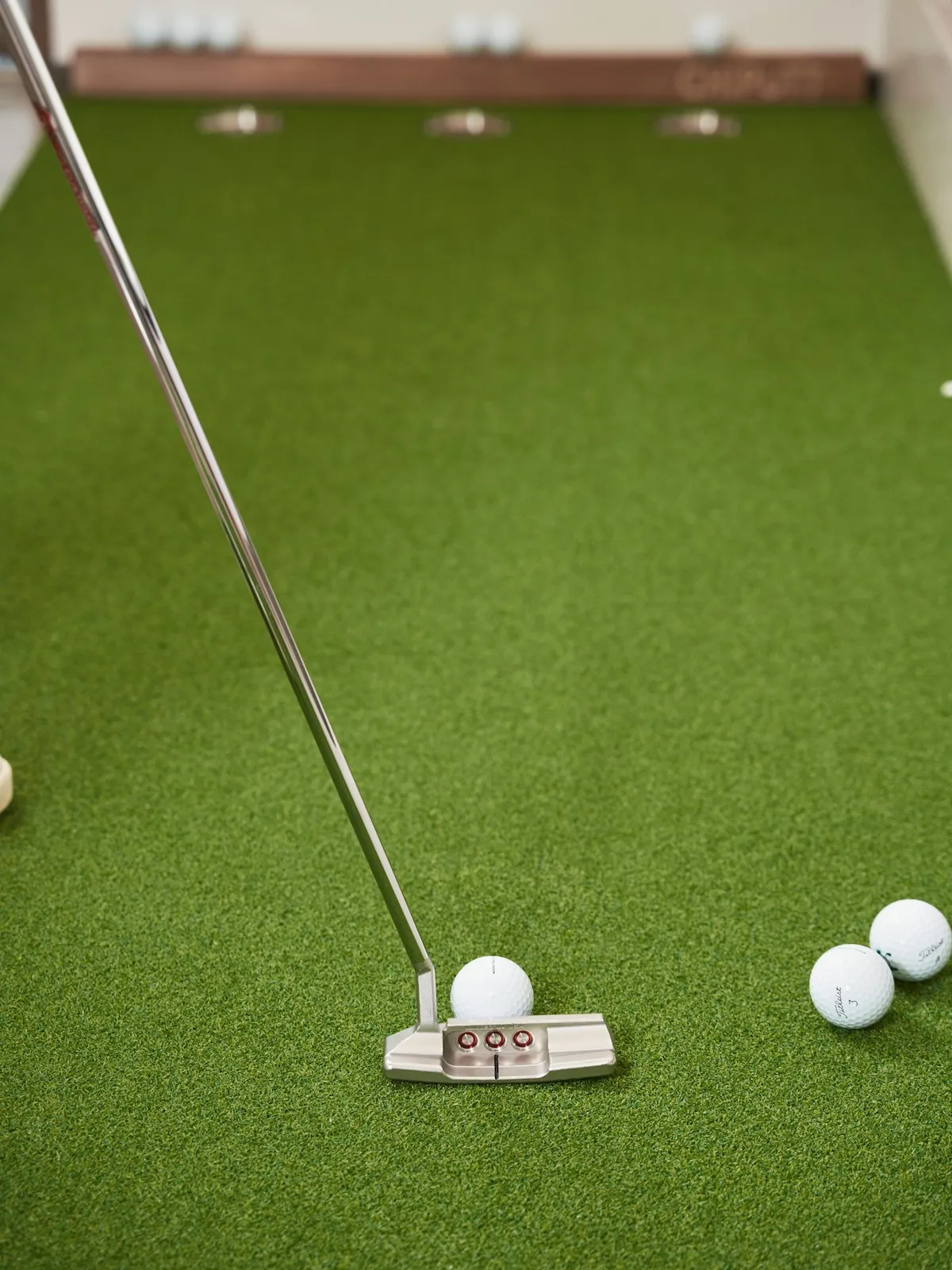
Putting speed is measured in “stimp” feet — how far a ball rolls off a Stimpmeter, the USGA’s standard measuring bar. The USGA classes regular greens as slow at 8 feet, medium at 10 and fast at 12, with U.S. Open preparations running 10 to 14 feet. Indoor turf should be bought against that same scale, because the whole point of home practice is rehearsing speeds you will meet outside.
| USGA speed class | Regular play | U.S. Open prep | Who practices here |
|---|---|---|---|
| Slow | 8 ft | 10 ft | Beginners, kids |
| Medium | 10 ft | 12 ft | Club golfers, most home buyers |
| Fast | 12 ft | 14 ft | Low handicaps, tour prep |
Target 9–11 stimp for general home practice
That band matches the medium club greens golfers actually play, and it is where textured nylon and tuned polypropylene both land.
Two build details move a turf’s speed more than its price tag: shorter, denser pile rolls faster, and any sand dressing slows the surface while firming it. A mat bought at 11 that feels like 9 at home usually has fiber crush from a tight packaging roll, not a spec problem — brushing the pile upright restores it.
Grain Direction: The Flaw That Trains Bad Putts
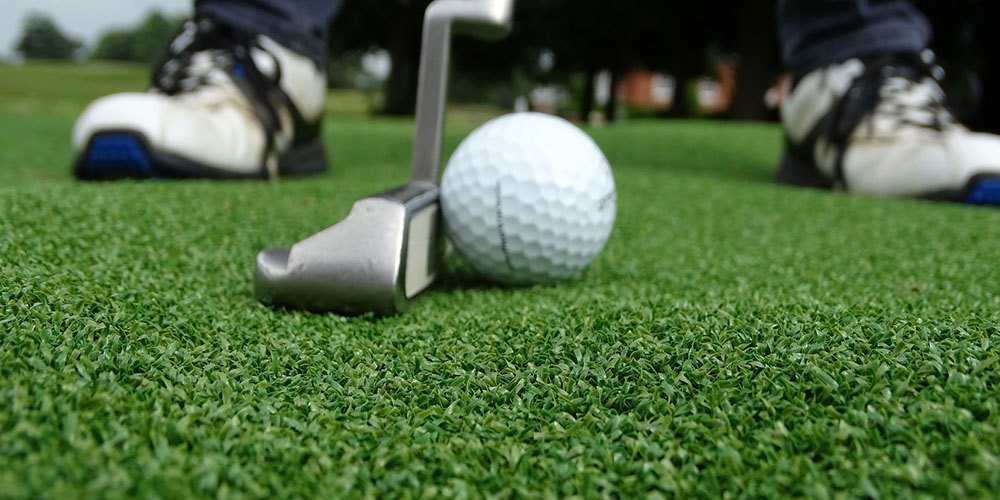
Every cut-pile turf has a grain — the direction the fibers lean after manufacturing. On cheap mats the ball breaks slightly toward the grain on every putt, so a golfer can spend a winter unknowingly compensating for a phantom slope. Quality indoor turf answers this two ways: textured nylon is manufactured non-directional, and better polypropylene mats are sheared so the grain runs along the putt line rather than across it.
Common mistake: testing a mat only in one direction. Roll ten balls up the mat and ten back; if the two directions behave differently, the grain will follow the customer home.
Sizing the Practice Area Before Ordering
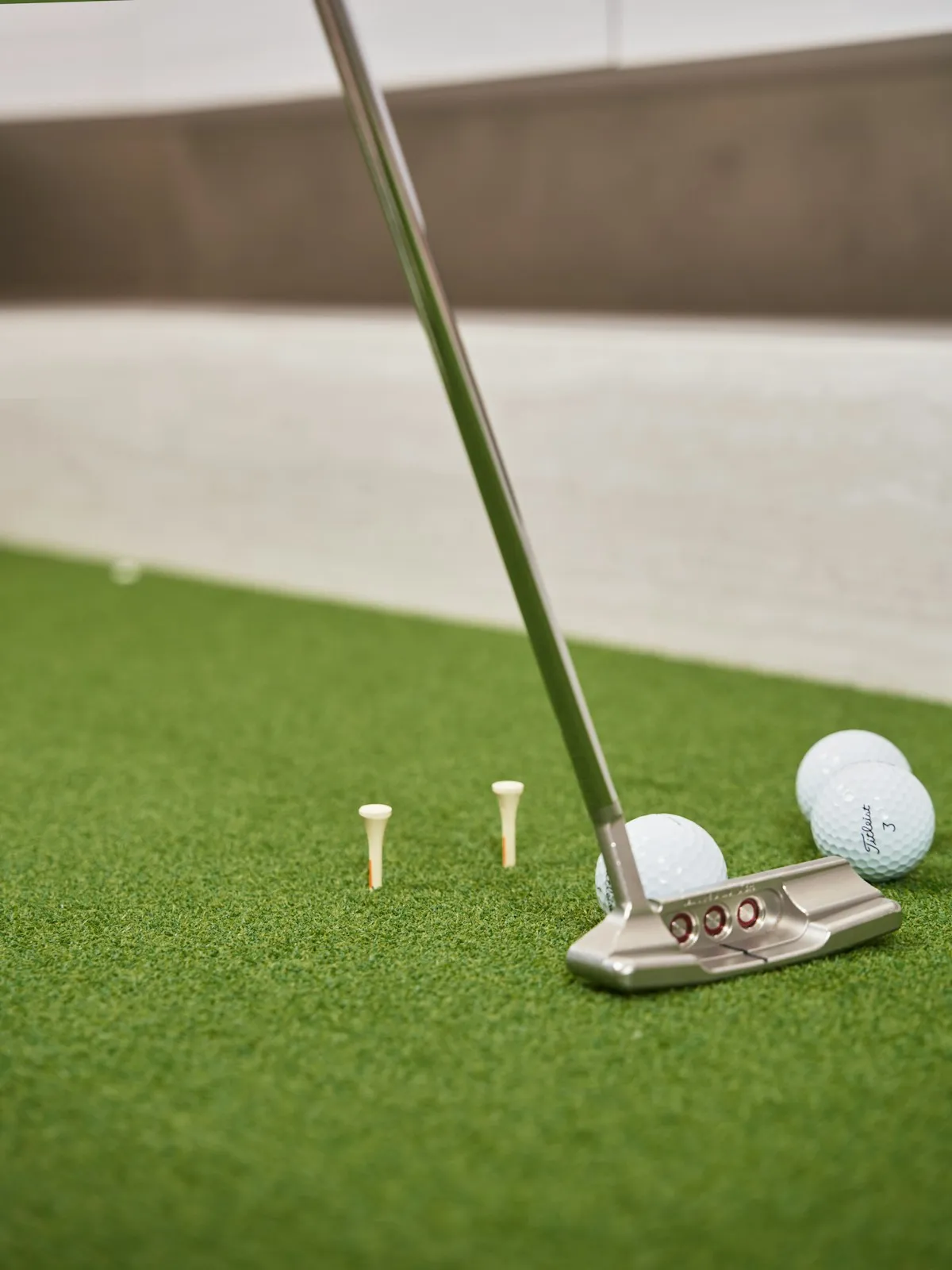
The home-practice market has settled sizes, and ordering against them prevents both dead stock and odd-cut waste. The classic starter footprint is 3 feet by 9 feet (about 0.9 × 2.7 m), which fits a hallway and keeps freight cheap. Room-scale builds run 8 by 15 feet, and anything larger becomes a custom project priced per square meter, shaped by the site rather than the catalog.
Default to 3′×9′ for first orders
One roll width covers the standard mat with minimal offcut, holes and cups ship separately, and the SKU tests demand before custom sizes commit capital.
What Importers Should Stock for Home-Practice Demand
Distribution math looks different from golfer math. A range that sells needs one traffic product, one margin product and one anchor product — typically a polypropylene starter mat, a dual-surface mid-tier system and a textured nylon flagship. Mixed containers are normal in this segment: rolls and mats cube differently, and a 20-foot container commonly blends two or three SKUs without touching MOQ minimums.
Three specification questions sort suppliers quickly. First, is the pile sheared and inspected for grain before packing? Second, what stops roll memory in packed cartons — large-diameter rolling or flat packing? Third, can hole positions, stimp targets and logos be customized per order? Factories that answer all three in writing can carry a retail range; factories that hedge will ship the grain problem to your customer service inbox.
Common Mistakes When Buying Indoor Putting Green Turf
Three failures account for most returns and bad reviews in this segment. All three are visible at the factory gate long before they reach a living room.
- Buying speed without checking grain — a fast mat that breaks one way is a slow refund.
- Packing rolls too tight — fiber crush reads as a slow, glossy patch that no customer can fix.
- Skip-grade backing — thin latex backs curl on hard floors; a full PU backing lies flat for the product’s whole life.
Buyer check: ask for a 30-second video of ten balls rolled in both directions on the actual production batch. It costs the supplier nothing and answers the grain, speed and flatness questions at once.
Frequently Asked Questions
What is the best indoor putting green turf for beginners?
A polypropylene mat in the 9–10 stimp range. It is affordable, forgiving on off-center strikes and tough enough for daily use without any infill maintenance.
How fast should an indoor putting mat be?
For general practice, target 9–11 stimp feet, which matches medium club greens. Serious players training for fast course conditions should step up to textured nylon at 12 or higher.
Does indoor putting turf need infill?
Usually no. Textured nylon stands up on its own, and polypropylene mats are factory-tuned. A light sand dressing can fine-tune speed, but it is an adjustment, not a requirement.
Why does my mat roll differently in each direction?
Grain. The fibers lean one way from manufacturing, so against-the-grain putts roll slower and break less. Quality sheared or textured turf minimizes the difference; brushing the pile upright also helps.
What size should a first indoor putting green order be?
The market-standard 3′×9′ mat tests demand with minimal freight and no custom cutting. Room-scale 8′×15′ builds and modular tiles suit buyers once the entry SKU proves itself.